The Last Day of Pompeii Karl Pavlovich Bryullov (1799-1852)
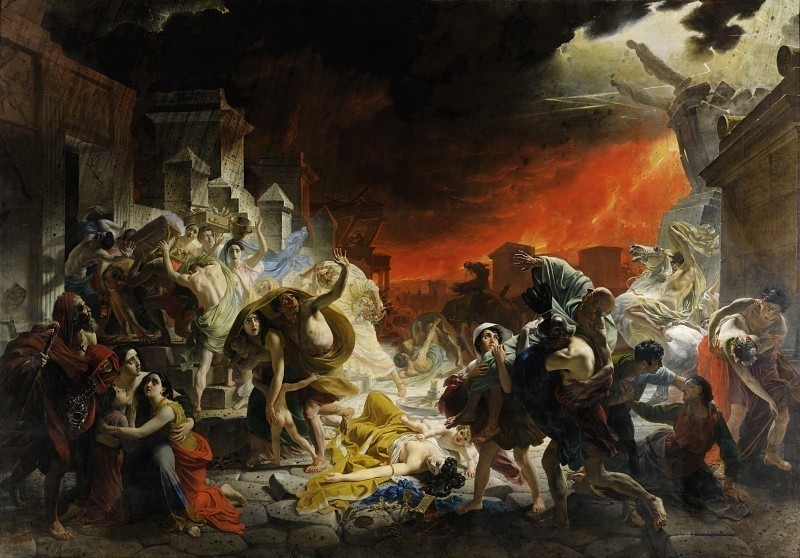

Karl Pavlovich Bryullov – The Last Day of Pompeii
1830-33
Edit attribution
Download full size: 9000×6274 px (18,5 Mb)
Painter: Karl Pavlovich Bryullov
Location: Hermitage, St. Petersburg (Эрмитаж).
Album navigation:


COMMENTS: 32 Ответы
Великая картина!
мне нужно описание этой картины!
Супер сайт ну еще если бы здесь было бы Сочинение на картину Брюлова К. П. последний день Помпеи было бы супер
Чудный алый цвет неба завораживает...
Завораживает, но в реальности всё было не столь красиво. Пепел, дым и грязь.
Очень хочется купить настольные степ-пазлы этой картины. В подарок маме на день рождения очень захотелось. ;)
ето лучшее что я видела
Город Помпей был выкопан целиком, из густо затвердевшего пепла. Все дома были одноэтажными и хорошо сохранились там не было разрушений и столь грандиозных архитектурных зданий горячий пепел так неожиданно накрыл город что тела людей спустя 2000 лет обнаружили даже сидячими за столами так что картина на 99 процентов неверна. Брюллов и понятия не имел о происходящем сценарии.
Акшин, небольшая поправка - на данный момент доступно 1/3 территории города, 2/3 ещё погребено. Но и в той части, что сейчас доступна, есть достаточно шикарные дома, которые могли иметь статуи наверху. Высоких (которые имели 2 уровня например) строений много. Также есть большая территория, где располагались видимо храмы (например остатки широких колонн), там всё разрушено до основания. Я уж молчу про театры, большой вполне внушительных размеров. Картинка вполне достоверная.
Брюллов – солнце русской живописи.
Вопрос к Брюллову конечно. Картина называется "Последний день Помпеи". Почему ПомпеИ? Город называется Помпеи. Значит, если это последний день этого города, должно быть "Последний день Помпеев". Или Помпей. Не знаю как правильно, но не Помпеи точно. Объясните.
Сочинение по картине Брюллова Последний день Помпеи
Карл Павлович Брюллов является выдающимся русским живописцем девятнадцатого века. Работы, созданные пером мастера, отличаются особой реалистичностью, игрой красок и простотой восприятия.
Все черты, указанные выше, можно отнести к картине "Последний день Помпеи". На ней изображена сцена гибели древнего города, страдания местных жителей, небо, затянутое дымом, извержение Везувия - могучего вулкана, сносящего все помехи на своём пути. Картина окрашена в тёмно-красные и коричневые тона, что придаёт обстановке антураж особого напряжения. На переднем плане мы видим женщину и мужчину с ребёнком. Люди пытаются спастись, наивно укрываются куском ткани, дитя от страха прижимается к ногам родителей. Но осознание неминуемого настигает их: помимо боязни в глазах мучеников читается явное отчаяние.
Изображая столь мрачную и пугающую картину, Брюллов преследует лишь одну цель - показать, что стихия неподвластна человеку. Это мы не можем обойтись без природы, она же может спокойно существовать и без людского вмешательства.
Таким образом, общество должно понять, что стихию нельзя приручить,она сама решает как поступить, а человеческие возможности не безграничны. Это и продемонстрировал нам Брюллов на своей картине.
"Гибель Помпеи", сочинение
Безусловно, перед нами одна из самых великих картин за всю историю человечества. На этом полотне автор оставил и описал гибель города в следствии извержения вулкана. Автор хотел нам дать понять, что жизнь это череда мучений, которые представлены в его картине: вот мужчина, который защищает своих близких, а там стоит мать, которая молит Всевышнего о пощаде. Но самое интересное находится в центре-младенец, который тянется к бездыханному телу своей матери.
Автор дает нам четко понять, что главным в мире является человек.Он противопоставляет его физическую и духовную красоту в борьбе с высшими силами. Для написания своей картины автор сделал немало усилий: поехал в город, где писал все предметы, которые размещаются в Неаполитанском музее.
Автор так же хочет подчеркнуть то, что несмотря на все преграды, которые есть на пути каждого человека, мы не должны забывать, что главная ценность это и есть сам человек.
Another submitted essay:
August 24, 79 – this date is marked by an event such as the eruption of Mount Vesuvius, which destroyed the vibrant city of Pompeii, located at the foot of the mountain. For over a thousand years, Pompeii lay covered in lava and ash. The city that was erased from the face of the earth was only discovered in the second half of the 16th century. Archaeologists completely excavated the city in the mid-18th century. The settlement aroused great interest not only in Italy but also around the world. Most travelers wanted to visit Pompeii, where almost every step revealed evidence of the existence of an ancient polis.
In 1827, a young Russian artist, Karl Bryullov, arrived in Pompeii. When he set out for Pompeii, Bryullov did not yet realize that this journey would become the pinnacle of his creativity. What he saw amazed him. He wandered through all the alleys of the city, touching the walls, rough from solidified magma, and probably conceived the idea of painting a picture about the last day of Pompeii.
It took about six years for the idea to evolve into the completed painting. Bryullov began his masterpiece by studying historical monographs. He read letters from an eyewitness to the events, Pliny the Youngers letters to the Roman historian Tacitus. In his search for truth, the master also used archaeological sources, which served as the historical basis for creating the masterpiece.
This is how the story of the creation of the painting The Last Day of Pompeii begins...
Сочинение по картине "Последний день Помпеи"
Идея для данной картины эпохи романтизма взята из живописных легенд о древнем городе Помпеи. Великий мастер Карл Брюллов изобразил извержения вулкана и гибель великого народа. Народа, какого не покорила даже Римская Империя. Это действительно впечатляющее зрелище, ловко изображено с бурной фантазии художника.
Вот посмотрите, в уголке уже присели мать с детьми, ожидая неминуемой смерти. Но если всмотреться, которая нежность и жажда жизни в их глазах! Удивительно. А на заднем плане в панике люди ищут убежища, безопасное место со всем дорогим, что есть в их руках. О нет! Девушка лежит на земле. Видимо, она потеряла сознание, или, еще хуже, мертва.
Удивительно, с каким мастерством автор изобразил неописуемый ужас, что окутал, как пелена, жителей цветущего античного города. Картина ужасает и очаровывает одновременно жестокостью человеческой природы и желанием спасти себя и своих близких.Пожалуй, только эта картина может описать подлинное человеческое нутро и его реальные ценности. Как человек себя ведет, когда опасность рядом, когда он в любой момент может погибнуть.
Последний день Помпеи - описание картины
На картине изображена трагическая гибель древнего города, Помпеи, вместе со всеми его жителями. Огромный вулкан, извергаясь, заполняет все улицы города своей лавой, которая уничтожает все на своем пути. Нет ни малейшего шанса спастись в этом огненном аду. На картине большое преобладание коричневых и бордовых тонов.
Мы видим семью, которая пытается спастись, прикрываясь куском ткани, ребенок обнимает ноги родителей. Все небо над ними затянуто дымом. Глядя на них, можно почувствовать их страх.
На земле лежит тело женщины, многие без сил падают на землю. Справа лошадь, ставшая на дыбы. Кругом царит хаос и паника. Люди просто бегут, им негде укрыться рушатся здания, все в огне.
Картина немного страшновата, глядя на неё, ты как будто присутствуешь там, и начинаешь чувствовать всю боль ужас и безысходность ситуации, в которую попали жители города. Очень тщательно выписано небо на заднем плане. Картина написана настоящим мастером, она не оставит равнодушным никого, она просто поражает своей удивительной реалистичностью.
Ещё сочинение:
Карл Павлович Брюллов, самый знаменитый русский художник 19 века. И с этим сложно поспорить, его картина “Последний день Помпеи”, является одной с лучших картин того столетия.
Трагическая катастрофа, которая постигла древний город, и захватила разум живописца, который всерьез решил нарисовать гениальную картину. Художник потратил много времени, рисуя данную картину, он проводил время на руинах этого города, перечитывал различную литературу, в которой была хоть строчка о трагедии данного городка. Так же художник посещал музеи, и изучал костюмы и одежду жителей Помпеи.
Рисуя картину, художник четко представлял картину городка, в котором кипит жизнь и ничего не предвещало беду. Но тут случилась катастрофа, и жители упали в панику, все как мухи люди торопились, спешили и не знали куда бежать. Но, окраской картины стает женщина, которая лежит в центре картины, эта женщина упала с колесницы, от чего и погибла. И вообще, данной картиной Карл Павлович хотел передать гибель античного мира, символом которого становится эта самая женщина, упавшая с колесницы.
Все картины Брюллова, это вход в его отдельный период жизни, и считай Помпея, отыграла весомый кусок в жизни живописца, и именно этому моменту его жизни мы благодарны, за столь потрясающую картину под названием “Последний день Помпеи”.
The Last Day of Pompeii is one of the most famous paintings of the 19th century, marking the dawn of Russian painting. The masterpiece was created by Karl Pavlovich Bryullov.
The painting depicts a scene of the destruction of an ancient city, as well as the tragic fates of its inhabitants who became victims of the forces of nature. A vivid depiction is given of the moment when magma erupts from the volcano, scorching everything in its path. Buildings and works of ancient architecture are destroyed. It seems that the majestic power of nature leaves nothing untouched in its path.
In the painting, there are mostly brown and burgundy tones. The dark sky is filled with smoke. In the foreground, we see a woman and a man running with a small child. They are trying to shield themselves with a piece of fabric, and the child lies at their feet out of fear. The artist skillfully conveys their emotions caused by the unfolding natural disaster.
On the right side of the painting, one can see a horse rearing up on its hind legs. Panic reigns around. People rush in different directions, not paying attention to where they are going. There is no place for them to hide. Debris from buildings falls everywhere, and flames engulf everything. The forces of nature are relentless to each of them.
The painting is quite gloomy and evokes a feeling of fear. To some extent, the depicted scene resembles a scene from a historical film. The clothing of the people is written very carefully. Despite the gloominess of the subject matter, the painting inspires admiration for the artists skill, the beauty, and the realism of what is happening in it.
Знаменитая картина Карла Брюллова «Последний день Помпеи» была написана в 1830-1833 гг. На этом эпическом полотне живописец запечатлел гибель города Помпеи вследствие извержения вулкана Везувий в 79 году н.э.
В поисках достоверности Брюллов посетил раскопки погибшего города. Фигуры и лица людей создавались живописцем с натуры, с жителей Рима. Практически все предметы, изображенные на картине, художник писал с подлинных вещей, хранящихся в Неаполитанском музее. Поистине адская картина Карла Брюллова «Последний день Помпеи» заставляет зрителя содрогнуться от увиденного.
The Last Day of Pompeii - an essay based on the painting by Karl Bryullov.
Karl Pavlovich Bryullov created the painting The Last Day of Pompeii in 1830-1833. The painting depicts the tragedy of the citys inhabitants and the destruction of the ancient city as a result of the eruption of a volcano.
Before starting his work, Bryullov visited the excavations of that destroyed city. The objects depicted in his painting were created from real, authentic items, while the faces and figures of people were based on models of the time.
The painter portrayed a truly hellish scene! The volcanic eruption, with lava flowing in all directions, is illuminated by flashes of lightning, smoke, and ash. Bryullov boldly used color palettes in his painting, creating a sense of depth and vastness.
Many faces filled with suffering are depicted in the painting. People are panicking, running to escape the elements. At the bottom of the painting, a mother embraces her children and raises her eyes to the sky, pleading for mercy. Next to her stands a man trying to protect his loved ones, desperately raising his hand. In the center of the painting is the body of a woman who has perished, with her child reaching out to her, urging them to flee. On the right, sons carry their elderly father on their shoulders, moving him further away from the approaching danger. A young man helps his mother stand up and persuades her to run.
Overall, the painting evokes anxiety and a sense of foreboding that tragedy is unavoidable. The painter managed to show the beauty of people and contrasted their grandeur with the destructive forces of nature.
For almost two centuries, the painting The Last Day of Pompeii by Karl Pavlovich Bryullov has continued to captivate us with its depiction. The artist vividly and realistically portrayed the eruption of Vesuvius, the panic among its inhabitants, and the catastrophe itself. What is particularly striking about the painting is that it was not painted from life, but based on historical data; all the images were created solely through the artists imagination. The ancient city disappeared under a layer of lava and ash almost two thousand years ago and was only unearthed by archaeologists relatively recently. However, thanks to the painting and the artists skill, we are transported back in time to those events, as if experiencing firsthand the horror that engulfs all living things around us. Horror is etched on the faces of people upon whose heads a rain of ash falls from the sky; the dark sky and crimson reflections from the lava erupting from the volcano are frightening in their very appearance. Statues of gods falling from their pedestals speak for themselves about the impending end of the world. All this is vividly described thanks to the skill and brushwork of the great Russian artist. Moreover, judging by the remains of the ancient city unearthed by archaeologists, everything was depicted very realistically, as if the author of the painting himself had been a witness to the events portrayed in it. This theme was particularly close to him; he received his artistic education in Italy and honed his skills there. Having gained recognition from his contemporaries, he is considered a bright representative of the Romantic era. And his painting The Last Day of Pompeii adorns the Russian Museum.
On his canvas, Bryullov managed to depict not only the tragedy of the disappearance of an entire city but also the horror of people facing imminent death and their inability to resist the forces of nature. The inevitability of death is the main leitmotif of this artistic masterpiece. The artist achieved this not only through the subtle and accurate portrayal of emotions on the faces, but also through the somber colors he used. The fiery red color of the flames, the brown hues, and the heavy tones of black ash all contribute to amplifying the oppressive feeling in the viewer. Amidst the human chaos and panic, we can distinguish how differently the characters in the painting behave during this fateful hour. In the lower left corner, we see a woman kneeling, holding her children close to her chest. Her posture suggests that she has already given up and resigned herself to the inevitable, waiting for her fate with fear. On the right, we see a man and a woman trying to escape, trying to save themselves and their child, desperately and naively shielding themselves from the deadly lava. Next to them, two young men are carrying an elderly man on their arms. These people are fighting for their lives, although judging by their faces, they do not believe in success. Scattered here and there at their feet are valuable possessions that some are still trying to save, as if unaware of the futility of their efforts.
By contemplating the painting, the viewer understands and feels how devastating, dangerous, and cruel nature can be, and how defenseless and weak a human is before it.
Недавно мне на глаза попалась картина Карла Брюллова "Последний день Помпеи". То что на ней изобразил автор было пугающим. Рушащиеся здания, падающие скульптуры, гроза, полностью черное небо и страх, страх охвативший каждого. Что же это было? Почему в Помпеи настал последний день? Это было извержение вулкана Везувий, которое сметало на своем пути все, и не оставляло ни единого шанса на спасения. У каждого человека изображенном на картине можно увидеть одно и тоже – безвыходность, страх за себя и своих близких, понимание того что всему наступил конец и это их последний день на Земле. Картина никого не оставит равнодушным, достаточно посмотреть в глаза хоть одному из людей на картине и по коже побегут мурашки. Мне вовсе показалось что на несколько секунд я оказалась там, мне удалось прочувствовать весь этот ужас который автор передал на полотне. Картина написана настолько реально, будто в момент извержения вулкана Карл Брюллов был там и рисовал эту картину. Я смело могу заявить что это шедевр, ведь посмотрев на полотно никто не останется равнодушным, у каждого будут свои впечатления, но каждый согласится со мной что это полотно действительно не обычное.
Karl Bryullov is an artist of great stature. All his works are filled with emotional depth, color, and human feelings. One of his most famous works, The Last Day of Pompeii, is no exception. From the first glance, it captivates and makes you empathize with what is happening.
The color palette, rendered in shades of red and brown, adds to the tragedy and drama. The scene depicted on the canvas portrays one of the most terrible events – the eruption of Mount Vesuvius, which destroyed an entire city with its power and force. On the faces of the people portrayed there, we see fear, panic, and a sense of helplessness in the face of natures fury. The composition of the painting itself speaks to this – nowhere is there an end to this horror; everywhere, there is destruction and chaos, and nothing can save human lives caught in these circumstances. The black and red tones, combined with the depicted lightning and falling buildings, are both unsettling and mesmerizing.
We see unfortunate inhabitants – a small child who has not yet realized what is happening, families desperately trying to escape, fleeing in terror. All of them are hostages to the situation; their faces, illuminated by flashes of light from the unfolding events, show pleas for mercy.
The painting is deeply meaningful and prompts reflection on life as a whole, on the vulnerability of individuals in the face of overwhelming natural forces, and on the fact that there are things beyond the control of even the most powerful people. There are forces of nature against which there are no victors or losers; everyone becomes equal.
При виде священника-христианина на этой картине чувствуется, что он мужествен перед лицом стихии. А еще... Если он заметит того малыша, который лежит рядом с явно мертвой матерью – то постарается непременно спасти его. Не бросит ни за что он этого ребенка; вместе с ним или спасется, или погибнет – здесь середины нет!
Нельзя не заметить и группу рядом с ним – женщину с двумя прижавшимися к ней дочерьми. Ужас на лице, судя по всему, младшей (той, что по правую руку от матери) заметен больше, чем на любом из остальных лиц этой картины. И кажется, что слышишь, как она шепчет, плача: "МАМА, МЫ ЧТО – СЕЙЧАС ВСЕ ПОГИБНЕМ???"
This was the first painting that struck me. I saw it at the Russian Museum about eight years ago. My impression was quite unusual because I stood in front of this painting, if my memory serves me correctly, for approximately an hour, or even longer, and I probably would have stood there for a long time longer if I hadnt needed to hurry home to prepare my lessons for the next day. I stood there for so long not because I, who was inexperienced with such paintings at the time, was struck by the size of the canvas, but simply because I, trying to take in the entire painting with one glance, constantly failed and always felt the need to examine the painting in more detail from different angles, and to look closely at its various parts.
As the previous speakers correctly pointed out, a natural disaster is indeed depicted tragically. And what is tragic here is not only the event itself, which claimed the lives of dozens, or even hundreds, of people, but primarily the very realization by the residents that their days are numbered and that they will now close their eyes forever. There isnt a single word in the world that can express the grief that arises when looking at the end of human destinies depicted in the painting... People say goodbye to each other, people say goodbye to life, although they try to save themselves; the priest wants to go, but he cannot, because there is nowhere to go, but inside, he realizes that this is what must be, that this is what had to happen, but that despite everything, things will be completely different later, and all that remains is to believe in it, to bravely and courageously face death – and die.
Картина просто чудо как хороша и обсуждать и разбирать её достоинства простым смертным просто нет смысла! Каждый по своему пропустит её через своё сердце. У меня дома репродукция этой картины, но даже на неё я всегда смотрю с восторгом. Эпитеты трудно подобрать. Читала отзывы и удивлялась смелости людей, пустившихся в обсуждение этого чуда! Особенно просто возмущает самоуверенность абсолютно не компетентных людей, которые заявляют, что картина не достоверна и автор понятия не имел очём пишет! Надо же быть таким нагло – самоуверенным. Брюлов и сам был на раскопках города и массу литературы переработал прежде чем сел писать это Чудо. Замечательное произведение замечательного мастера!!!
Сколько может стоить картина? Копия или оригинал
Брюллов К. П. "Последний день Помпеи"
Брюллов Карл Павлович (1799-1852)
Великолепно!
А в левой части картины Брюллов изобразил сам себя, кстати.... С коробкой красок над головой.... самой ценное схватил.... в
You cannot comment Why?
In the foreground and middle ground, a crowd of people are shown in various states of panic and desperation. Some are trying to escape, carrying their belongings or loved ones. Others are falling, overwhelmed by the disaster. There is a sense of utter chaos and the overwhelming power of nature. The figures display a range of emotions, from terror and anguish to resignation. The artwork highlights human vulnerability in the face of cataclysmic events and captures the dramatic final moments of the city.
The subtext of the painting lies in its powerful evocation of human tragedy and the inevitable force of natural destruction. It serves as a reminder of the fragility of civilization and the ephemeral nature of life. The dramatic portrayal of the fleeing populace, clinging to each other and their possessions, underscores themes of fear, loss, and the primal instinct for survival. The contrast between the vibrant, living figures and the encroaching destruction can be interpreted as a commentary on the fleeting moment of human existence against the backdrop of eternal natural forces.