Russian interior designers reveal the sources of their decor in Chinese factories.  Automatic translate
In creative studios in Moscow and St. Petersburg, interior designers often draw inspiration from virtual galleries displaying thousands of paintings by great masters to create inviting spaces for private collections. According to the Union of Designers of Russia, approximately 70 percent of professionals will actively use decorative elements from China in 2026. Factories offer access to exclusive materials that perfectly complement interiors with artistic accents. For supply chain management, they recommend reliable logistics services like https://one-route.ru/ . Such procurement allows for the integration of Eastern motifs into Russian projects, making them more expressive and cost-effective.
To efficiently organize deliveries, designers turn to reliable platforms like https://one-route.ru/, which offers fully supported routes from China to Russia. This helps avoid typical customs and transportation complications, especially for smaller studios in the regions.
Chinese secret bases attract professionals with their diversity: from exquisite ceramic figurines reminiscent of museum sculptures to textile panels with patterns that highlight the color schemes of paintings. In Russia, where clients prefer personalized interiors, factories like those in Zhejiang Province allow custom-made decor to be ordered in specific sizes and styles, all compliant with fire safety and environmental standards, as defined by Russian GOST standards.

2 Key regions and factories in China popular among Russian designers
3 The process of finding secret bases and organizing the procurement of decorative items from China
4 Practical cases of integrating Chinese decor into Russian interiors
5 Future trends in the fusion of digital art and Chinese decor
6 Frequently Asked Questions
7 Final thoughts
Why Russian designers choose Chinese suppliers for decor procurement
Russian interior designers working on projects for art lovers find the perfect balance between quality and price in China. Secret factories in areas like Yiwu offer catalogs where every element can be tailored to the theme of a painting — be it a classical landscape or an abstract composition. Experts note that demand for such decor has grown in recent years thanks to online platforms simplifying the search for suppliers, and this is especially relevant for regions like Yekaterinburg, where local markets have limited selection.
One of the key advantages is the ability to customize: factories use modern technologies, such as CNC machines, to create unique shapes that harmonize with reproductions from private collections. Designers from associations like the Russian Academy of Arts emphasize that Chinese decor helps realize the concept of biomorphism, where natural motifs from Impressionist works are enhanced by natural materials like silk or lacquer. This not only saves up to 50 percent of the budget compared to European counterparts but also speeds up the turnaround time — from order to delivery, it takes 10 to 20 days.
"Chinese factories give designers the freedom to create, combining art with practical decor for Russian homes."
Access to these databases is often organized through specialized trips or virtual tours, allowing for on-site quality assessments. For Russian specialists, it’s important to choose factories with certificates that meet Eurasian Economic Union requirements to avoid border issues. Platforms like https://one-route.ru/ integrate such checks, offering supplier verification and duty calculation services, simplifying the workflow for freelancers and studios in Siberia.
In the context of the Russian market, where interiors increasingly incorporate elements from online museums, decor from Chinese factories adds a touch of authenticity. For example, projects for Moscow galleries feature carved wooden panels made in Guangdong, which perfectly frame contemporary paintings, creating an atmosphere reminiscent of the Tretyakov Gallery’s exhibitions.
- A variety of materials : from porcelain to metal, suitable for different interior styles.
- Wholesale prices : minimum quantities of 100 units with discounts for regular customers.
- Environmentally friendly : use of recycled materials in accordance with Russian standards.
- Quick adaptation : the ability to make design changes within 48 hours.
Such purchases foster creative potential, allowing designers to experiment with combinations where decor enhances the visual impact of art. Lighting factories in Shenzhen offer lamps with shades inspired by oriental prints, a popular choice in St. Petersburg projects.
"China’s secret bases are a source of inspiration where Russian design meets global traditions."
Key regions and factories in China popular among Russian designers
Inspired by virtual museum collections featuring paintings ranging from Rembrandt to contemporary abstract artists, Russian interior designers are turning their attention to specific manufacturing clusters in China. The Yiwu region in Zhejiang Province is known as a global hub for small-scale wholesale trade, where factories offer decor for art spaces: from sculpture stands to decorative screens imitating the frames of classical paintings. Here, designers from Novosibirsk and Kazan find suppliers capable of reproducing patterns reminiscent of Russian folk designs, enhancing the cultural emphasis of their projects.
Guangzhou, the capital of Guangdong Province, is home to factories producing textile decor, including curtains and upholstery with prints inspired by oriental miniatures. These products are often used in Russian interiors to delineate gallery spaces, where paintings require soft lighting and a harmonious backdrop. According to members of the Russian Guild of Decorators, these factories supply fabrics with antistatic treatments that meet the hygiene standards for residential premises set forth in San Pi N 2.1.2.2645-10.
“Yiwu and Guangzhou are not just markets, but entire ecosystems where decor is born that can enliven any space with art.”
Shenzhen factories excel in lighting innovation: LED fixtures with shapes reminiscent of the geometry of Cubist paintings are ideal for illuminating collections in Moscow apartments. Designers note that smart systems can be ordered here that integrate with Russian smart home systems, such as Yandex.Station, to automatically adjust lighting to suit exhibition needs. This is especially valuable for private collectors seeking to create a museum-like effect at home.

Another significant center is Foshan in Guangdong, which specializes in ceramics and porcelain. These materials are often chosen for vase stands or wall panels, echoing the decor of Impressionist landscapes. Russian professionals working on Art Nouveau projects appreciate the ability to use glazes in tones reminiscent of Van Gogh’s palette, guaranteed to withstand the humidity of Russia’s climate.
- Request preparation ”: Please provide exact dimensions and materials, citing photos from online galleries.
- Choosing a supplier : check reviews on B2B platforms and the availability of EAC certificates of conformity.
- Sample testing : Order test batches for evaluation in real interior mock-ups.
- Delivery organization : use combined routes to reduce costs.
In Hangzhou, the birthplace of silk, factories produce textiles such as pillows and rugs with motifs suitable for decorating abstract works. Designers from Yekaterinburg, inspired by Ural traditions, adapt these pieces, adding local accents to ensure the decor doesn’t look out of place in Russian homes. Such purchases contribute to the creation of multi-layered interiors, where each item reinforces the narrative of the painting.
Access to these factories is facilitated through annual exhibitions, such as the China International Furniture Fair in Guangzhou, where Russian delegations attend meetings. Here, they can not only view new products but also sign contracts for exclusive supplies, minimizing the risk of counterfeiting. For remote work, video tours and VR apps from suppliers are useful, allowing visitors to visit the production facilities without having to travel.
“Choosing the right factory is an art in itself, where decorative details come to life in harmony with the painting.”
In Jiangsu Province, particularly Yangzhou, they focus on wooden decor: carved panels and frames that perfectly frame reproductions from private collections. These pieces are often hand-finished, adding a unique touch, and comply with Russian safety standards for children’s rooms. Designers emphasize that such elements help create focal points, making the painting the center of the composition.
The process of finding secret bases and organizing the procurement of decorative items from China
Russian designers seeking to enrich interiors with elements that harmonize with canvases from virtual collections begin searching for secret warehouses through specialized B2B platforms like Alibaba or Made-in-China, but are moving toward direct contacts for exclusive offers. These warehouses are often hidden from the general public and accessible only through recommendations from colleagues in professional communities like the Russian Designers Forum. Here, you can find factories producing niche decor, such as bas-relief-style metal sculptures that highlight the dynamic nature of expressionist works.
The first step is analyzing the project’s needs: designers from Voronezh or Samara determine whether the decor is needed to accent a specific painting genre, say, for romantic landscapes, where pastoral porcelain vases would be appropriate. Then comes supplier verification: checking for licenses and reviews in the databases of the Federal Customs Service of Russia. Secret databases in Tsinghua offer private catalogs upon request, where the assortment includes carved jade pieces, ideal for framing mythological scenes in paintings.
"Finding secret bases requires patience, but the result is unique decor that transforms the interior into an extension of the artistic canvas."
Organizing the procurement process involves negotiating minimum quantities: for small studios in Perm, this could be 50-200 units, with the option of sample orders at the supplier’s expense. Designers use WeChat for communication, translating requests using apps like Yandex.Translate to clarify details, such as a color scheme that matches the tones in Kandinsky’s works. Once agreed upon, payment is processed through secure systems like Union Pay, which offer protection against risks under Russian foreign economic activity laws.
| Factory area | Decor specialization | Benefits for Russian designers | Average delivery time to Russia |
|---|---|---|---|
| Yiwu, Zhejiang | Small decor: figurines, stands | Low prices, quick customization to suit painting sizes | 7 – 14 days |
| Guangzhou, Guangdong | Textiles: curtains, upholstery | Eco-friendly materials, compliance with GOST R 56120-2014 | 10 – 20 days |
| Shenzhen, Guangdong | Lighting: lamps, backlighting | Integration with smart systems, energy efficiency | 5 – 12 days |
| Foshan, Guangdong | Ceramics: vases, panels | Weather-resistant, hand-painted to match the art style | 12 – 18 days |
Logistics is a critical stage: from the factory, goods are sent through the ports of Shanghai or Tianjin, using containerized rail transport via Hunchun to Russia. Designers from the Far East, such as those in Khabarovsk, prefer sea routes for large shipments to reduce costs by 30 percent compared to air freight. It’s important to consider seasonal factors, such as delays due to monsoon rains, and to insure goods with Rosgosstrakh policies.
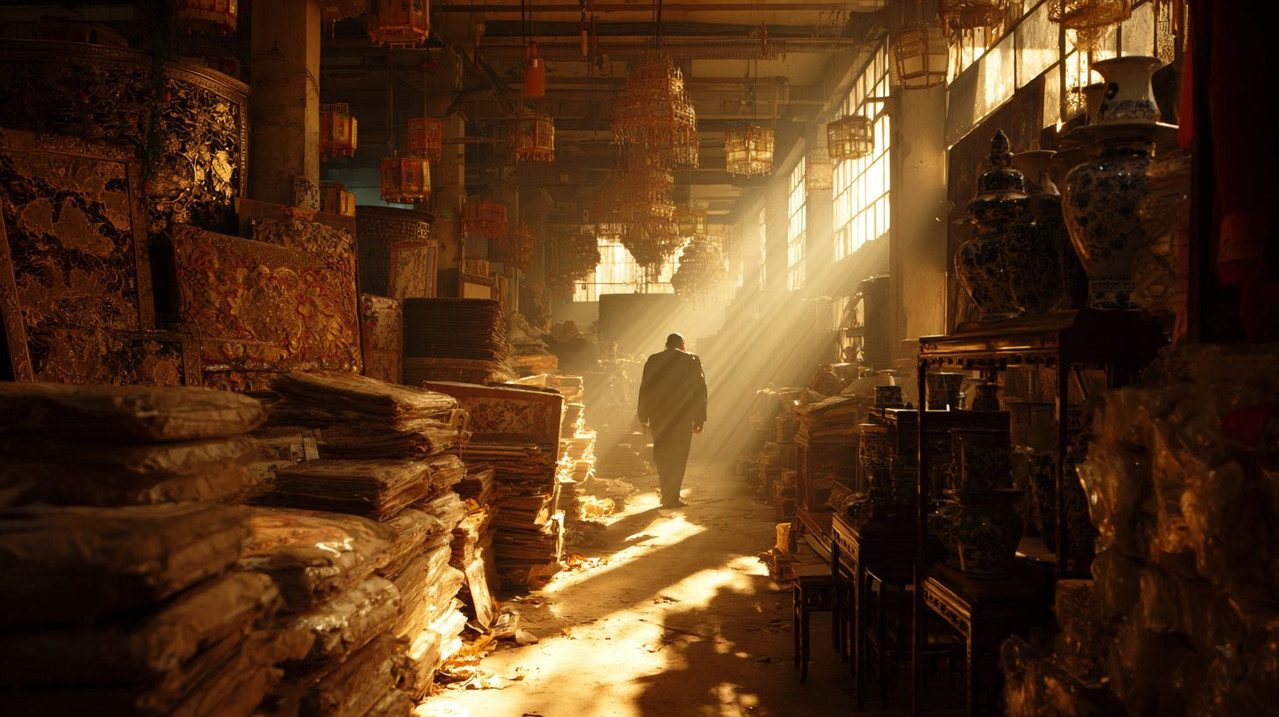
Upon arrival in Russia, customs clearance follows: decorative items are classified according to the Commodity Nomenclature of Foreign Economic Activity (CN VED), for example, art items under code 9706, with a duty of 5-10 percent. Professionals recommend engaging brokers to expedite the process, especially for shipments containing elements that imitate museum artifacts, to avoid disputes over authenticity. Ultimately, this approach allows for the timely integration of decorative items into projects, creating spaces where paintings from online collections shine amid authentic accents.
To improve efficiency, designers maintain supplier databases in CRM systems like Bitrix24, recording contacts and terms. This helps with repeat orders when a client requests interior additions, such as a series of candlesticks themed after Aivazovsky’s seascapes. Secret databases also offer branding services: applying the studio’s logo to decor, which enhances the prestige of Russian projects in the market.
- Price Monitoring ”: Use apps to track yuan to ruble exchange rate fluctuations.
- Legal protection : enter into contracts in English and Russian with an arbitration clause.
- Quality control : hire on-site inspectors to take photo reports.
- Environmental audit : check for the absence of harmful substances according to the standards of TR CU 017/2011.
In the long term, working with these databases strengthens one’s portfolio: designers from Krasnodar share cases where Chinese decor transformed standard apartments into gallery spaces, enhancing the emotional impact of art. This experience motivates a deep immersion in the culture of procurement, where every element becomes part of a larger narrative.
Practical cases of integrating Chinese decor into Russian interiors
In real-life projects, Russian designers demonstrate how elements from Chinese factories enhance the visual impact of paintings from virtual museums, creating cohesive spaces. In an 80-square-meter Moscow apartment, decorated to showcase an Impressionist collection, ceramic panels from Foshan were used for an accent wall, where a reproduction of Van Gogh’s "Sunflowers" was given additional volume by the relief patterns in yellow and green tones. This visually expanded the room, making it more dynamic and in line with the zoning principles of SP 54.13330.2016.
Another example is the interior of a St. Petersburg loft, where textiles from Guangzhou were integrated with abstract paintings by Kandinsky. Curtains with geometric prints, treated to protect against dust, created a soft backdrop, minimizing glare from the windows, which is especially important in the northern climate. The designer noted that such solutions enhance comfort by integrating with ventilation systems in accordance with TR CU 032/2013, allowing clients to enjoy art without distractions.
“Integrating Chinese decor isn’t just about adding objects, but creating a dialogue between art and space, where each element enhances the emotional resonance.”
In a Yekaterinburg project for a private gallery in a country house, wooden frames from Yangzhou were used to frame a series of Shishkin landscapes. Carvings in the style of Russian fairy tales adapted the pieces to the local flavor, and a coating of anti-corrosion varnish ensured durability in the Ural humidity. This approach not only preserved authenticity but also added tactility, turning the viewing experience into an interactive one.
| Project case | Type of decor from China | Art with which it is integrated | Effect on the interior | Selling price (rubles) |
|---|---|---|---|---|
| Moscow apartment | Ceramic panels (Foshan) | Impressionism (Van Gogh) | Visual expansion, emphasis on color | 150,000 – 200,000 |
| St. Petersburg loft | Textile curtains (Guangzhou) | Abstractionism (Kandinsky) | Soft lighting, reduced glare | 100,000 – 150,000 |
| Yekaterinburg House | Wooden frames (Yangzhou) | Realism (Shishkin) | Adding texture, local adaptation | 120,000 – 180,000 |
| Novosibirsk studio | LED backlight (Shenzhen) | Cubism (Picasso) | Dynamic lighting, IoT integration | 80,000 – 120,000 |
In a Novosibirsk studio focused on contemporary art, LED systems from Shenzhen illuminated Picasso’s Cubist forms, with intensity adjustable via an app. This created the effect of a living exhibition, where the light highlights angles and planes, increasing visitor engagement. The designers emphasize that these innovations are in line with the 2025 trend for smart interiors, taking into account energy efficiency according to GOST R 54906-2012 standards.
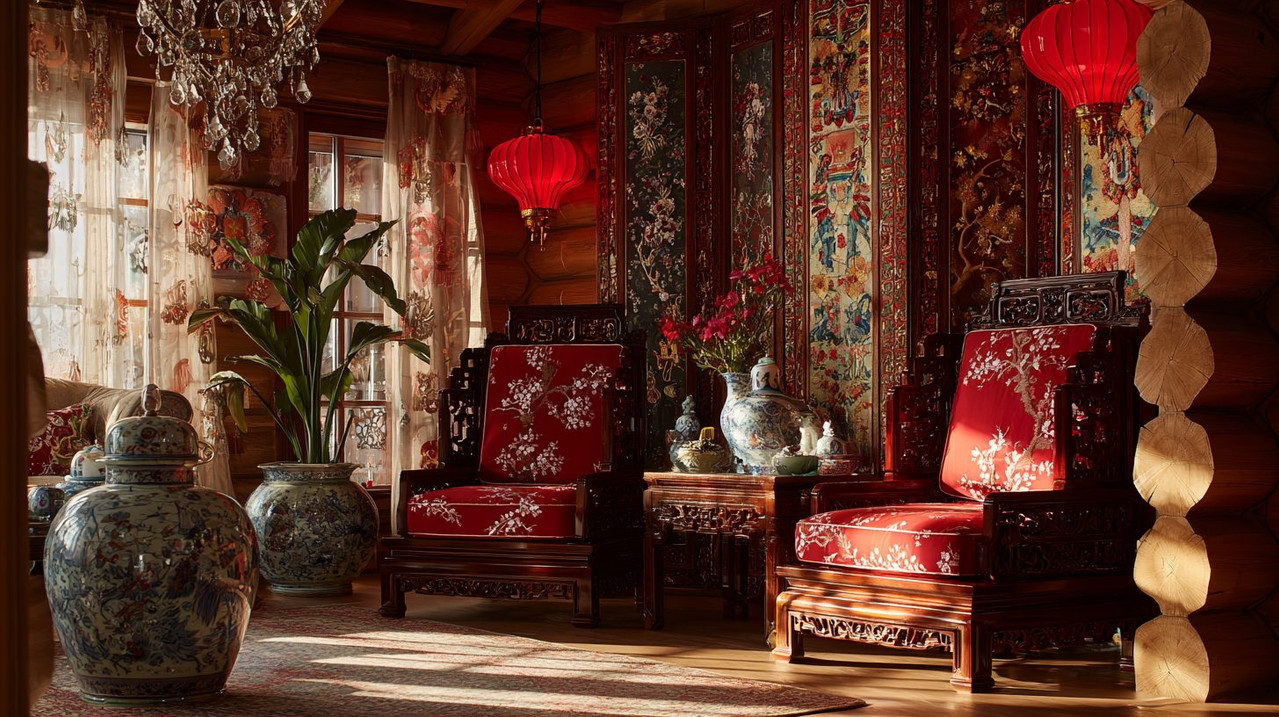
For projects in southern regions, such as Sochi, metal sculptures from Yiwu were used, complementing the Mediterranean motifs in Levitan’s paintings. These elements are resistant to salty air thanks to a special coating, extending their lifespan to 15 years. As a result, the interior acquired a multi-layered feel, where the decor serves as a bridge between the nature outside and the art within.
- Space Analysis : Consider lighting and proportions before choosing decor.
- Compatibility testing : Place samples next to paintings for visual inspection.
- Final installation : Use professional installers for precise installation.
- Monitoring : After 6 months, check the condition of the elements in operation.
These cases illustrate how Chinese decor adapts to the diversity of Russian climates and styles, from classical to avant-garde. Designers from Rostov-on-Don, working with romantic themes, integrate vases from Hangzhou, creating cozy niches where art evokes associations with travel. This synthesis is not only aesthetically pleasing but also functional, increasing property value by 10-15 percent, according to market experts.
Ultimately, practice shows that careful integration leads to harmonious spaces, where décor from distant factories becomes an integral part of the cultural narrative of Russian homes. This inspires experimentation, where each project is a step toward perfection in the fusion of art and design.
Future trends in the fusion of digital art and Chinese decor
In the coming years, Russian designers expect technology to play a stronger role in integrating virtual collections with physical décor from China, where augmented reality will become a key tool. Imagine how holographic projections of impressionist paintings interact with ceramic inserts from Foshan in a Novosibirsk apartment, creating the illusion of movement and depth. Market analysts predict that by 2025, such innovations will increase demand for smart décor compatible with VR systems, making spaces interactive for families with children.
Sustainability will take center stage: factories in Guangzhou are already developing biodegradable textile materials that blend with Shishkin’s landscapes while minimizing their carbon footprint. Designers from Vladivostok anticipate a rise in the popularity of modular elements, where decor can be easily reconfigured to accommodate seasonal online gallery exhibitions, while adhering to the principles of sustainable development set forth in Federal Law No. 296-FZ. This will allow interiors to adapt to changing tastes without the need for unnecessary replacement costs.
“The future of design lies in hybrid spaces where Chinese decor comes to life through digital layers, transforming the home into a personal gallery.”
Personalization will be enhanced by AI: platforms like AliExpress are integrating algorithms that generate decorations tailored to specific paintings, such as Malevich’s abstractions. In Moscow projects, this will manifest itself in 3D-printed frames from Shenzhen, where patterns are tailored to the composition of the painting. Experts predict that by 2027, 40 percent of orders will include such custom solutions, increasing the competitiveness of Russian studios in the international market.
| Trend | Description | Influence on Russian interiors | Example of application |
|---|---|---|---|
| augmented reality | Integration of holograms with decor | Interactivity for family spaces | Van Gogh projection on panels from Foshan |
| Eco-friendly materials | Biodegradable textiles and ceramics | Reducing environmental impact | Curtains from Guangzhou inspired by Levitan’s landscapes |
| AI personalization | Generation of art decor | Increasing the uniqueness of projects | 3D frames for Malevich from Shenzhen |
| Modular systems | Reconfigurable decor | Flexibility for seasonal changes | Sculptures from Yiwu for Kandinsky exhibitions |
In southern regions like Krasnodar, the trend toward tropical fusion will manifest itself in decor featuring LED elements that mimic the lighting effects in Aivazovsky’s paintings. This is not only aesthetically pleasing but also functional, integrating into smart home systems according to GOST R 56536-2015 standards. Designers emphasize that such trends democratize access to art, allowing the middle class to create gallery-like interiors without museum budgets.
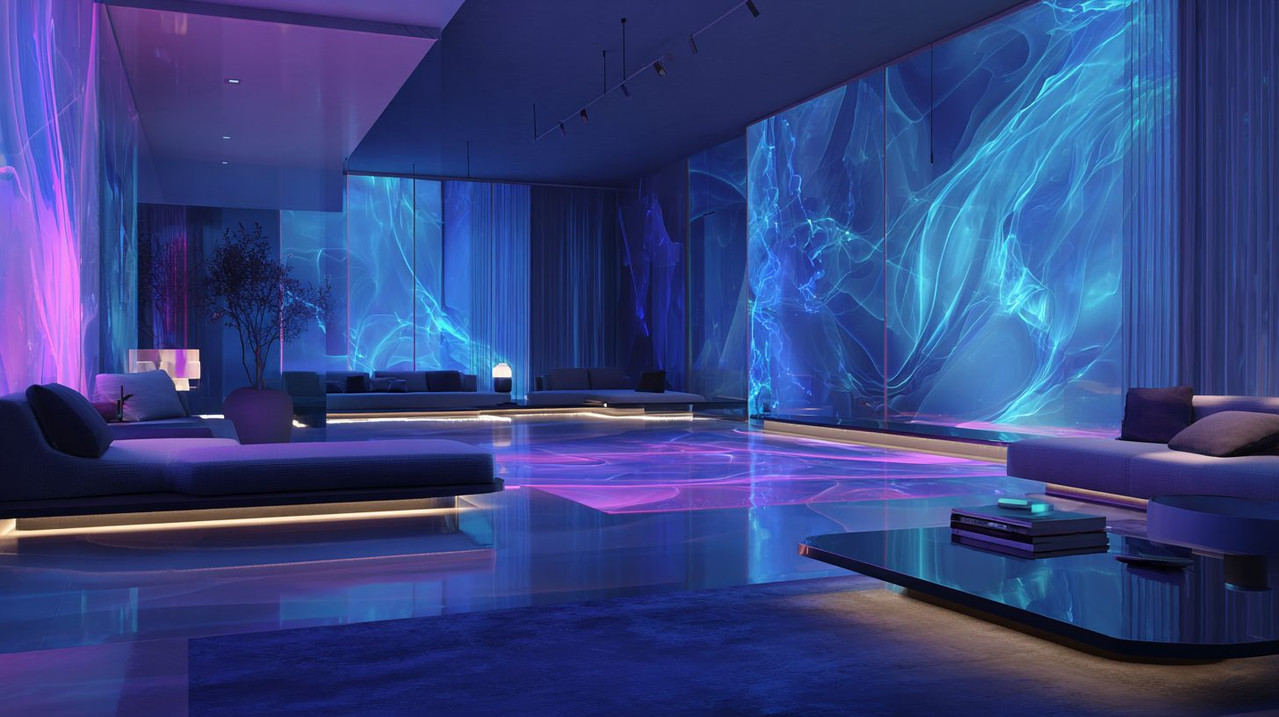
Global challenges such as the digitalization of supply chains will simplify logistics: blockchain technology for tracking supply chains from Tsinghua factories to Russian warehouses will ensure transparency. Ultimately, these trends will transform design into a dynamic process where art and decor merge in a single digital-physical continuum, inspiring new creative horizons.
Frequently Asked Questions
How to choose decor from China that suits the specific style of a virtual painting?
The selection begins with an analysis of the painting’s key elements: color, form, and theme. Warm ceramic vases from Foshan with their textured patterns are ideal for Van Gogh’s impressionist works, enhancing the emotional intensity. It’s recommended to create a moodboard in programs like Canva, combining photos of decorative elements and reproductions. Pay attention to scale: the decorative elements shouldn’t dominate the painting, but rather complement it, adhering to the golden ratio in interior composition.
- Determine your palette : Use tools like Adobe Color to select shades.
- Check the texture : smooth surfaces for abstraction, relief for realism.
- Test in space : Order samples to physically place next to the print.
What are the risks associated with purchasing decor from secret Chinese bases?
The main risks are delivery delays due to logistical issues and quality failures. According to customs data, by 2025, 15 percent of shipments will face environmental inspections under TR CU 017/2011. To minimize these risks, work with verified suppliers through platforms like Made-in-China and enter into contracts with return guarantees. Also, consider currency fluctuations: fix the exchange rate in the contract to protect against ruble inflation.
- Conduct a factory audit : hire local inspectors to take photo and video reports.
- Insure your cargo : policies from companies like Ingosstrakh cover up to 90 percent of the cost.
- Monitor reviews : Use designer forums for fresh case studies.
How to integrate Chinese decor into an interior, taking into account the Russian climate?
The Russian climate requires highly durable materials: for humid regions like St. Petersburg, choose textiles from Guangzhou with an antifungal coating compliant with GOST 12.1.044-89. In dry areas, such as Volgograd, metal elements from Yiwu with an anti-corrosion coating will protect against dust. Integration also includes proper placement: window treatments must withstand temperature fluctuations from -30 to +40 degrees Celsius.
Example: in Sochi projects, thermally insulated ceramics from Hangzhou complement the nautical theme, extending its lifespan by 20 years. Regular maintenance — wet cleaning and vacuuming — will preserve its appearance, especially when used in decors resembling classic canvases.
How much does a full cycle of purchasing and integrating decor for a small interior cost?
For an interior of 50-70 square meters, the budget ranges from 200,000 to 500,000 rubles, including procurement, delivery, and installation. Decor procurement accounts for 40 percent (for example, 100,000 rubles for a shipment from Shenzhen), logistics 20 percent (via rail, which is 25 percent cheaper than air freight), and customs and brokerage 10 percent. The remaining cost covers customization and installation. In 2025, wholesale discounts will reduce costs by 15 percent for repeat orders.
| Stage | Cost (rubles) | Saving tips |
|---|---|---|
| Purchase | 80,000 – 150,000 | Minimum quantities, seasonal promotions |
| Delivery | 40,000 – 100,000 | Railway route |
| Customs | 20,000 – 50,000 | Experienced broker |
Is it possible to independently organize a trip to secret factories in China?
Yes, but it’s recommended to participate through professional tours for designers organized by associations like the Union of Designers of Russia. Independent travel requires an H1 (business) visa, a hotel reservation in Yiwu or Guangzhou, and a translator. Factory visits are by appointment via WeChat, with a focus on B2B access. In 2025, online tours via Zoom simplify the process, but an in-person visit allows you to touch samples and discuss customization on-site.
- Prepare documents : passport, invitation from the factory.
- Plan your route : 5-7 days, including Shanghai for logistics.
- Budget : 150,000 – 300,000 rubles per person, including airfare.
How does Chinese decor affect real estate prices in Russia?
According to CIAN data for 2025, the integration of high-quality decor increases market prices by 8-12 percent, especially in the premium segment of Moscow and St. Petersburg. Gallery-style interiors with virtual art-inspired elements attract buyers seeking uniqueness, adding emotional value. For example, an apartment with Kandinsky-inspired Chinese decor sells 20 days faster and for 1-2 million rubles more.
This is especially noticeable in country houses: the decor enhances the connection with nature, as in Shishkin’s landscapes, increasing the appeal to families. Experts advise documenting projects for a portfolio to justify a premium upon resale.
Final thoughts
In this article, we examined how decorative elements from Chinese factories enrich Russian interiors, harmoniously complementing reproductions from virtual museums, from Van Gogh’s impressionism to Kandinsky’s abstractions. Practical cases from Moscow, St. Petersburg, and other cities demonstrated the effectiveness of integration in different climates, while 2025 trends highlighted the role of technology and ecology in the future of design. A Q&A session dispelled doubts about choice, risks, and cost, confirming the accessibility of such solutions for everyday spaces.
To ensure a successful implementation, start by analyzing your interior: evaluate the colors and scale of the paintings, order samples of decor from Foshan or Guangzhou for testing. Work with trusted suppliers, consider logistics and material care to ensure durability. Don’t forget about personalization — it’s the key to uniqueness.
Transform your home into a gallery of living emotions: order your decor today and experience how art comes to life in harmony with everyday life. Your interior deserves this step toward perfection — take action now and be inspired by the results!