From Pixel to Canvas:
Digital Artifacts in Museum Space  Automatic translate
In recent years, I’ve increasingly noticed how art is expanding beyond the traditional confines of the canvas and the museum. Digital images, previously confined to the screen, have become an integral part of contemporary artistic language. They are now found not only in galleries, computer screens, or game worlds, but also in museum exhibitions and virtual spaces. These aren’t just new formats; they’re a new way of thinking about art, how we perceive it, and how it reflects our world.
Digital art is striking in its versatility. It can be created using a computer program, exist as an interactive installation, respond to the viewer’s movements, or exist entirely online. Such works offer us new ways of experiencing images, where the pixel becomes a means of expression, not just a graphic element.
Today, museums and art spaces are increasingly embracing these forms, building a dialogue between traditional art and digital media. Virtual museums, augmented reality projects, and multimedia exhibitions are no longer a rarity, but are becoming part of the cultural landscape. This is no longer an experiment for effect, but a recognition that digital art can speak equally to classical art, creating new meanings for the viewer.
What is digital art and what are its forms?
When we talk about digital art, it’s important to immediately discard the preconceived notion that it’s something frivolous, like images on a screen or beautiful animation in a game. In reality, digital art is artistic works created using computers and digital technologies, which give artists new tools for expressing ideas. And it’s not just entertainment, but a fully-fledged visual language with its own meanings, forms, and aesthetics.
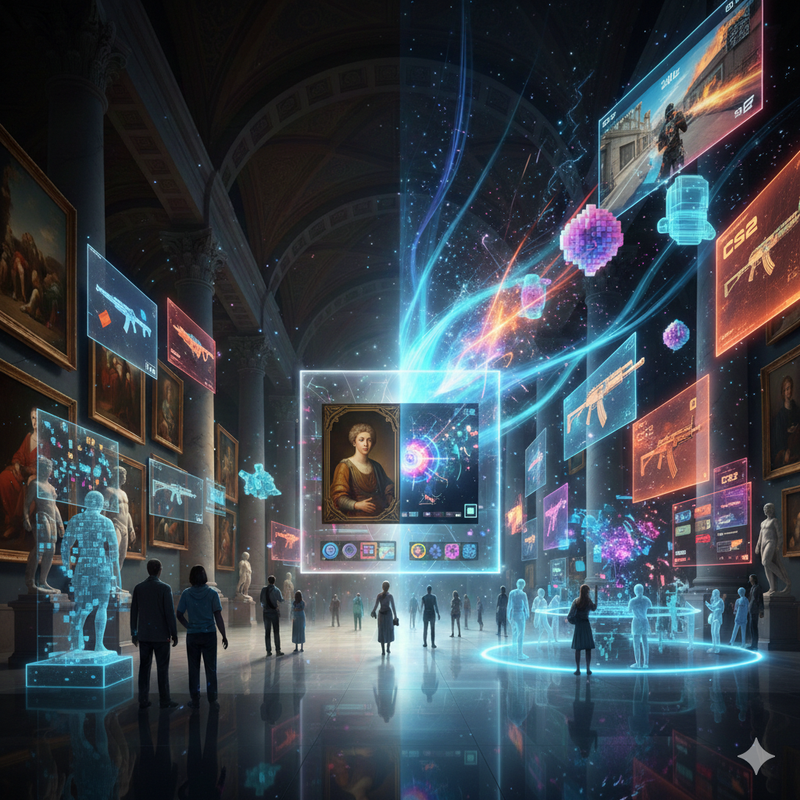
One example of immersive digital art spaces where light, movement, and interaction with the viewer become part of the artwork.
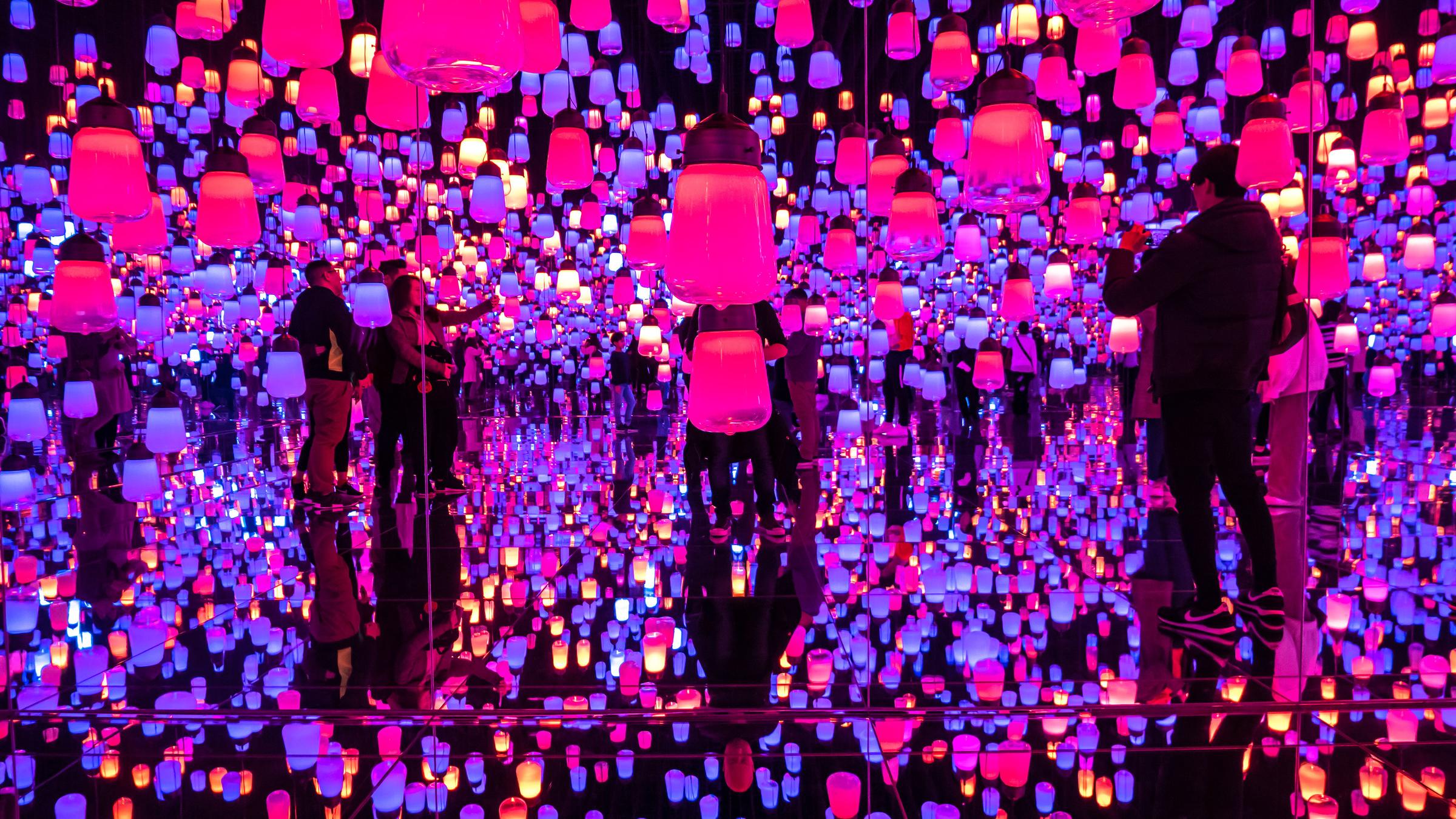
At the teamLab Borderless digital art museum, visitors become part of dynamic installations that respond to their movements.
In the digital museum experience teamLab Planets, visitors physically interact with visual forms and environments
Imagine a painting created not with a brush on canvas, but using complex software. Where, instead of oil and primer, the artist uses layers in graphic editors, generative algorithms, interactive elements, even virtual reality. It could be a flat 2D image, a 3D scene, an animation, a web project, or an installation that reacts to human presence.
The definition itself is quite broad and encompasses a wide variety of creative practices:
- digital graphics created in Photoshop or Procreate;
- three-dimensional objects and scenes created in 3D editors;
- interactive projects where art changes depending on the viewer’s actions;
- generative works created by algorithms;
- VR installations and virtual exhibitions where the viewer “walks” through a space that does not exist in the physical world.
I think it’s important to note that digital art can be not only beautiful but also meaningful. For example, there are projects where the authors use code as a means of artistically playing with form and meaning, and not just as a technology. In such works, the code becomes almost like a brush or a chisel — a tool with which the artist communicates with the world.
To put it simply, digital art isn’t about "where art is," but how we create and perceive it today. Whether an artist creates a 3D sculpture, an animation, or a virtual environment — they are all part of a single, larger visual world, evolving under the influence of technology, cultural demands, and artistic imagination.
Historical Perspective: From Virtual Museums to Immersive Spaces
Digital art didn’t emerge overnight. Its emergence was a logical continuation of the explorations artists had been pursuing since the late twentieth century, when computers were just beginning to enter creative practice. Back then, digital works existed primarily in an experimental format: simple computer graphics, algorithmic images, and the first online projects that were difficult to imagine in a museum setting.
One of the first steps toward the acceptance of digital forms were virtual museums. These were online spaces where viewers could navigate between rooms, view digitized works, and read curatorial texts. Similar projects emerged back in the 1990s and set an important trend: art could exist outside of physical space without losing its cultural value.
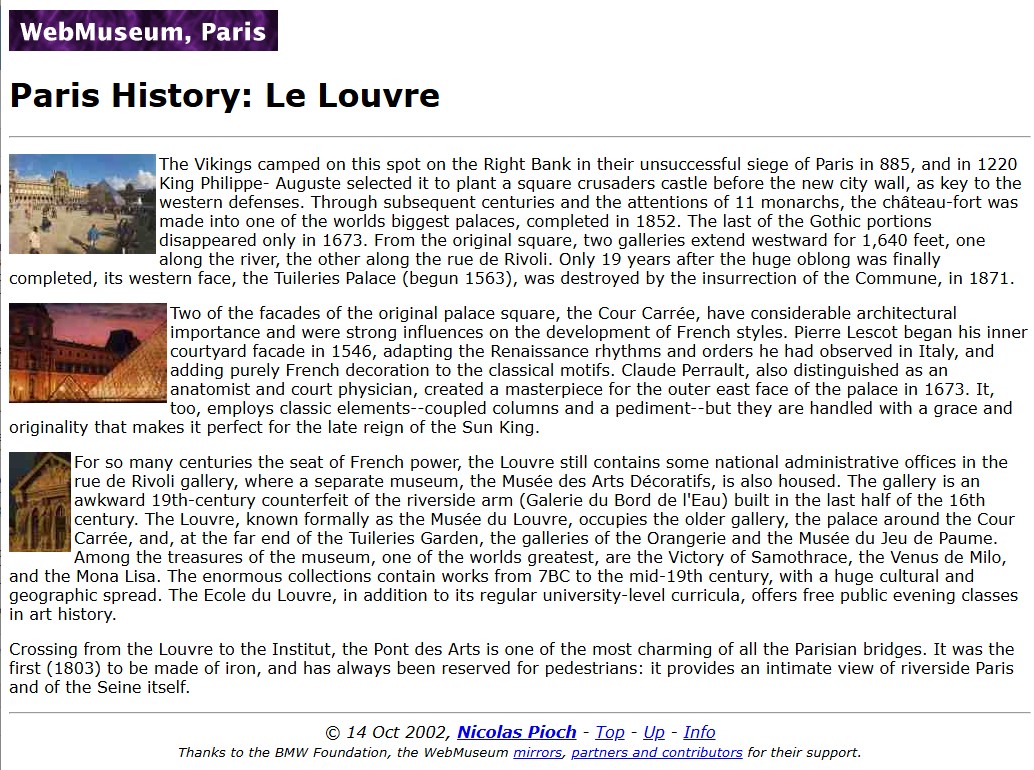
One of the first virtual museums, WebMuseum Paris, a late 20th-century project that demonstrated that art collections could exist in digital space.
Over time, technology became more sophisticated, and with it, the very concept of digital art changed. Artists began working not only with images, but also with space, movement, sound, and the viewer’s reaction. Interactive installations emerged, where the work exists only through human interaction.
At this stage, museums stopped perceiving digital art as an auxiliary format. It became part of curatorial strategies, media art festivals, and temporary and permanent exhibitions. International centers working at the intersection of art, science, and technology played a particularly important role.
The Ars Electronica Center in Linz is one of the world’s leading centers for media art, where digital forms have long been recognized as an integral part of the artistic process.
The next turning point came when digital art became unbound by screens. Immersive spaces, multimedia rooms, and lighting and sound environments allowed viewers to literally enter the work. It was no longer a matter of viewing the work from a distance, but rather a presence-based experience, where body, movement, and attention become part of the artistic statement.
teamLab’s immersive digital exhibition Borderless is an example of how digital art has evolved into a spatial experience.
Thus, digital art has evolved from an enthusiastic experiment to one of the most sought-after museum exhibition formats. This journey is significant not only from a technological perspective. It demonstrates how the roles of the viewer, the museum, the artist, and the work itself are changing in a culture where the boundary between the physical and the digital is becoming increasingly blurred.
How Museums Are Integrating Digital Art into Exhibitions
Today, museums are working with digital art not as an addition to the main exhibition, but as a fully-fledged artistic tool. This is evident in the changing logic of exhibition spaces. Instead of individual screens or temporary experiments, halls are emerging where digital works form a holistic visual and semantic experience.
One of the most common approaches is the creation of interactive spaces in which the viewer ceases to be a passive observer. Their movements, gestures, and presence become part of the work. The work exists here and now, changing depending on the viewer’s behavior, their route, and the timing of their interaction.
Another important format is the use of augmented and virtual reality. With virtual reality, museums create exhibitions that are impossible to create physically. These can include reconstructions of lost spaces, virtual galleries, or art worlds that exist only in the digital environment. Augmented reality, in turn, allows digital elements to be superimposed on real exhibits, expanding the context and depth of perception.
Many museums are also developing multimedia halls and digital labs where art and research merge. Here, viewers are invited not only to observe but also to understand how digital works are created, the technologies behind them, and how code, light, sound, and space are transformed into an artistic language.
It’s also important that digital art is increasingly being included in permanent exhibitions. This signifies institutional recognition. Museums are accepting it as part of their collection policies, alongside painting, sculpture, and graphics. Digital works are no longer a temporary sensation, but are becoming a stable element of museum language.
As a result, the role of the museum is changing. It is becoming not just a repository of objects but also a space for experience, dialogue, and interaction. Digital art helps museums engage with new audiences, not by dumbing down the content but by offering a different way to experience it.
It’s gradually becoming clear that the boundary between the physical museum and the digital space is increasingly less defining the artistic experience itself. Virtual exhibitions, online displays, and hybrid formats are no longer a forced alternative to the offline experience. They have developed their own language of interaction with the viewer, where the importance lies not in walls and display cases, but in the logic of navigation, visual rhythm, and a sense of presence.
At the same time, the perception of the digital image is changing. It exists less and less as a finished object and increasingly as a process, an experience unfolding over time. Viewers are learning to read visual codes, interact with space, and participate in the formation of meaning. This shift is especially noticeable where visual culture develops outside of museum institutions, in gaming, online, and interactive environments.
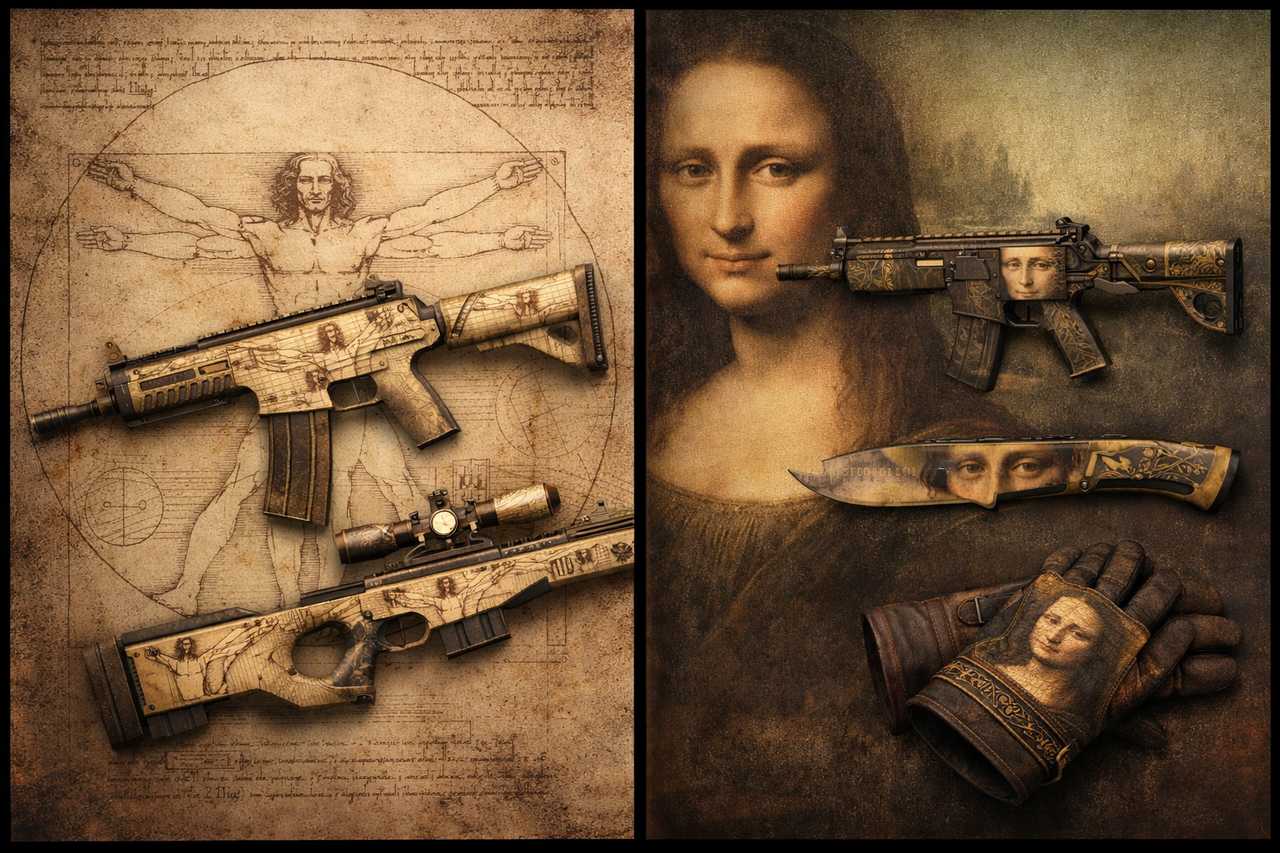
It is in these environments — primarily in visually rich gaming ecosystems — that the skill of working with digital artifacts is developed. Users become accustomed to distinguishing styles, paying attention to details of form, color, and texture, and perceiving a digital object as something valuable. At its core, this experience is similar to the museum’s appreciation of art, but it occurs in a different cultural context.
From a game’s visual language to a museum experience
When examining the visual language of CS2, it becomes clear that it actively engages with artistic heritage. It utilizes principles of composition, proportion, symmetry, and visual balance familiar from classical art. Sometimes these connections are manifested directly, through references to iconic works of world culture.

Referencing Leonardo da Vinci’s Vitruvian Man in digital design demonstrates how resilient basic visual principles remain. Proportion, rhythm, and the relationship between form and space are equally important in both Renaissance drawings and modern digital artifacts.
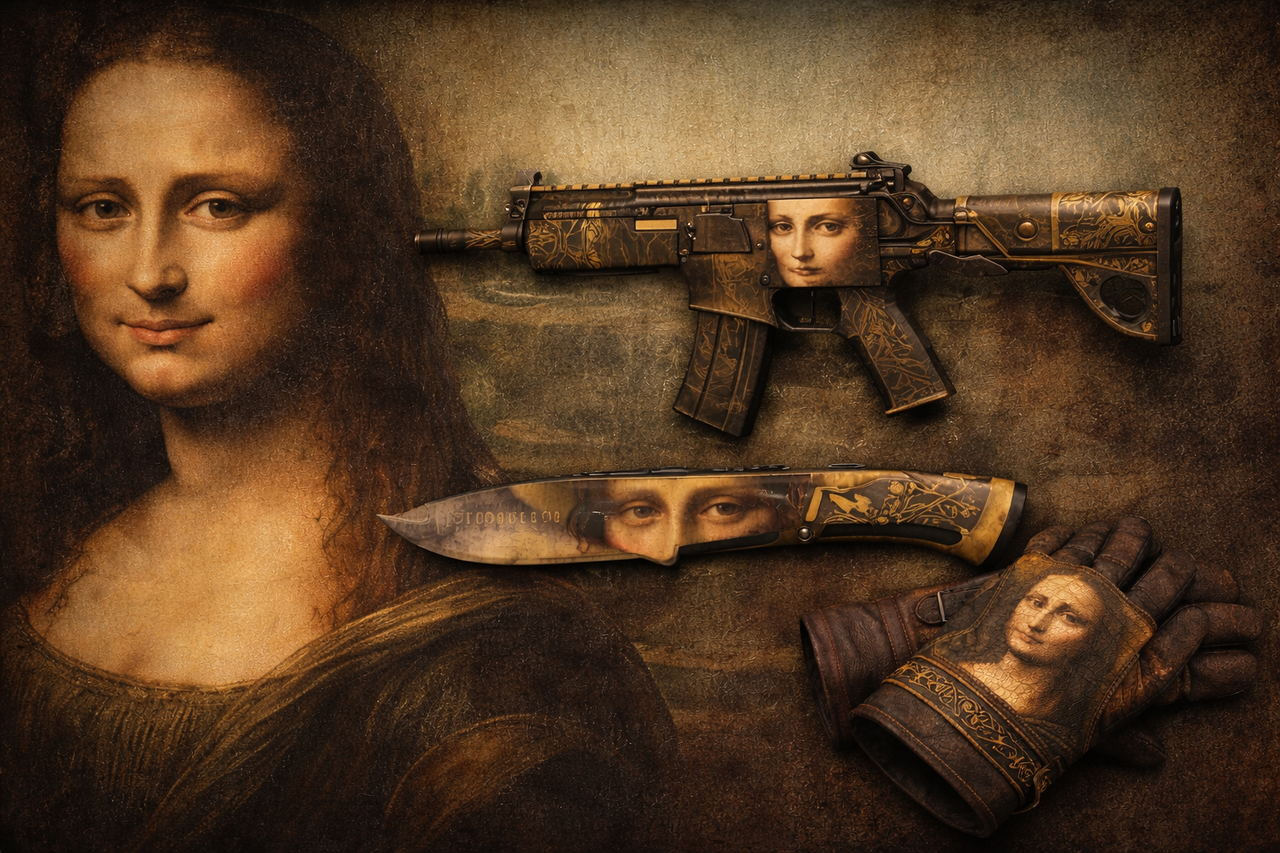
The same thing happens with the image of the Mona Lisa. Her recognizability, emotional restraint, and visual integrity prove easily transferable to the digital environment. In this context, the skin ceases to be simply a game element and begins to function as a carrier of a cultural code, understandable beyond the gameplay.
In this sense, projects like gooddrop.is are interesting not as entertainment, but as an example of how visual digital objects develop aesthetic perception in users. Through their use of form, rarity, variability, and attention to detail, a digital image begins to be perceived as valuable — just like an art object in a museum.
Digital artifacts continue their journey from screen to exhibition space, from gaming experience to institutional recognition. And the more closely we look at how visual culture is shaping today, the clearer it becomes that the pixel and the brushstroke have long spoken the same language.
- Top 15 Glock-18 Skins in CS2: Best Skins, Prices, and Guide to Choosing
- “Mockingbird” by Kathryn Erskine
- “Le Petit Nicolas” by René Goscinny
- In Yekaterinburg opened an exhibition dedicated to the anniversary of the house of creativity "Chelyuskinskaya"
- The results of the annual film festival in Gatchina "Literature and Cinema"
- Exhibition of high-tech art "Digital Looking Glass"