Why Learn English:
How to Outshine the Competition and Increase Income  Automatic translate
This year, English has finally ceased to be a line in the "Hobbies" section of your resume. It’s now a basic survival tool, as essential as knowing how to use a smartphone or a bank card. It serves as the lingua franca of the global economy — a universal data exchange protocol.
2 Reason 1: Career advancement and salary in foreign currency
3 Reason 2: Language of Technology (AI, Crypto, Web3)
4 Reason 3: Information Superiority (Content Without Translation)
5 Reason 4: Gaming and Networking Without Borders
6 Reason 5: Freedom of movement and a “World without borders”
7 Reason 6: Cognitive Health and Brain Fitness
8 Contrast: Today’s Legal Context and Globalization
9 Comparison table: Where is English needed 100%?
10 Practical algorithm: How to start learning if you don’t have time?
11 FAQ: Honest answers to frequently asked questions
12 Instead of a conclusion
Short answer: Why do you need English right now?
Proficiency in a language provides direct, unlimited access to key international assets: information, capital, and human resources. Without this skill, a specialist is locked in a local "fishbowl," which inevitably stagnates against the backdrop of the global ocean. At Skyeng, we believe that English is a lever. With it, you can scale your career and personal effectiveness with minimal energy expenditure.
Choose language courses to suit your goals!
What exactly do you get (TL;DR):
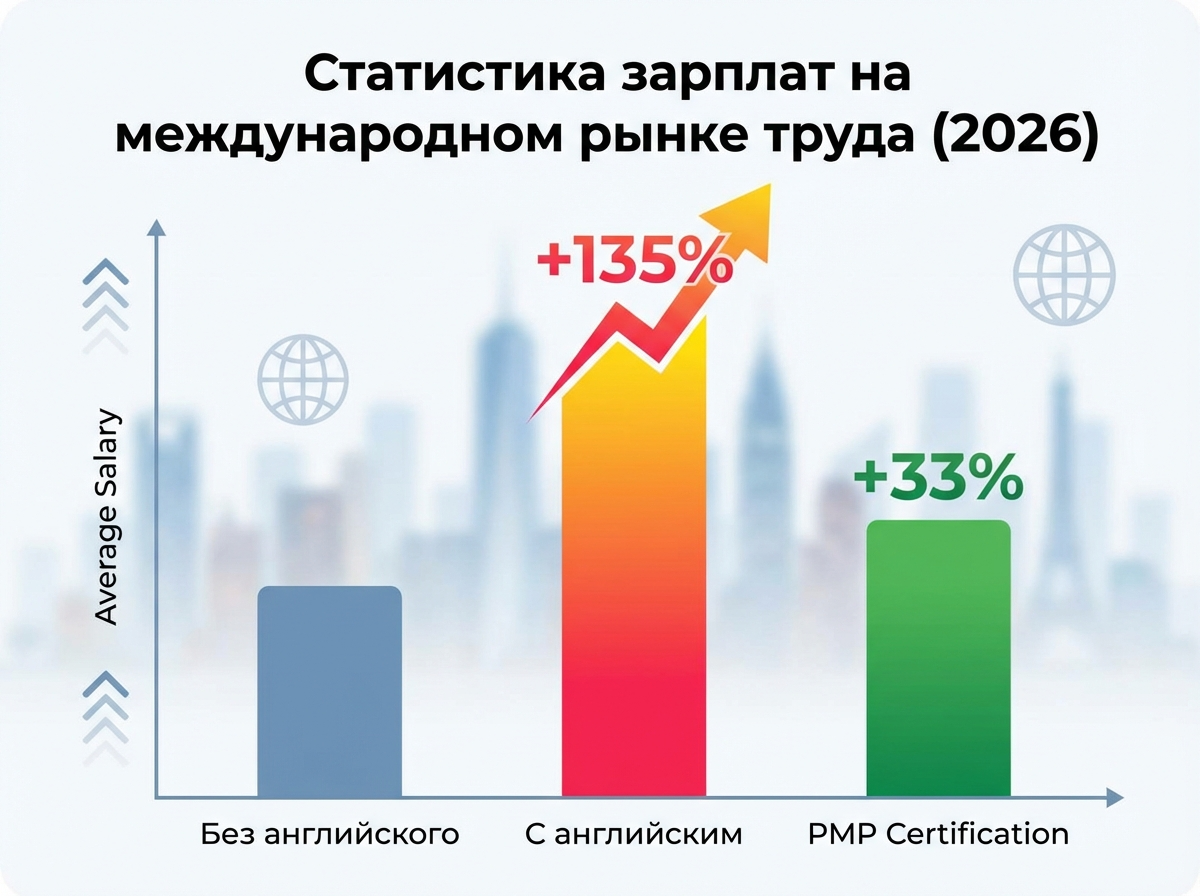
- Money : Access vacancies with salaries in foreign currency and a language bonus of up to 135%.
- Speed : Obtaining information from primary sources 17 years before it is translated.
- The power of AI : Efficient control of neural networks (ChatGPT, Midjourney) through precise prompts.
- Freedom : The ability to relocate and travel without stress.
- Health : Proven Brain Protection from Aging.
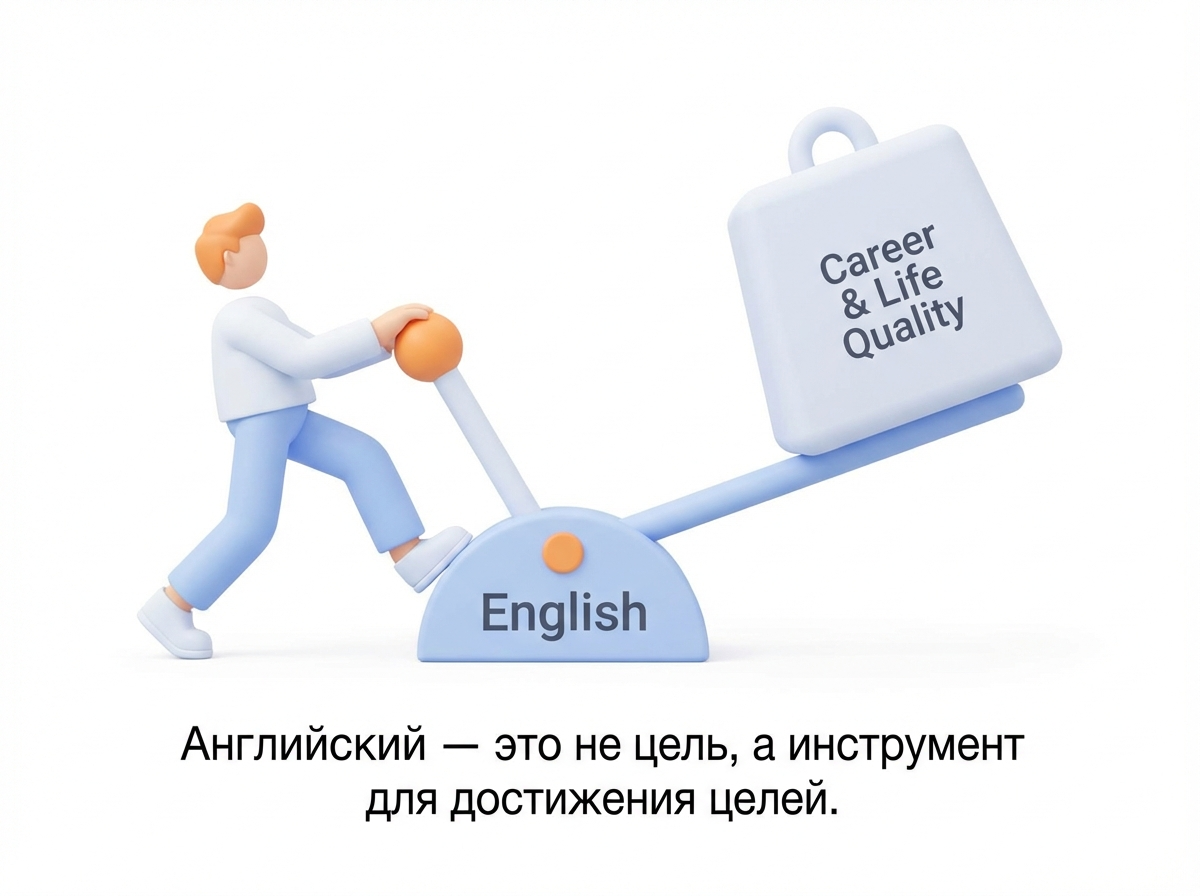
Reason 1: Career advancement and salary in foreign currency
The job market is brutal today, and we see it in every second resume. Competition for positions with currency restrictions or relocation opportunities has reached its peak. Proficiency in English has become the primary filter ("cutoff") when selecting candidates for international corporations.
Don’t speak the language? You automatically lose the opportunity to work remotely for international clients and hit a glass ceiling at local companies.
Access to vacancies at international giants
Tech leaders (Google, EPAM, etc.) and large outsourcing hubs don’t consider candidates below B2 (Upper-Intermediate) levels. This isn’t a whim of HR, but a strict operational necessity for communication in distributed teams.
The statistics are relentless: the demand for bilingual employees has doubled over the past five years. Around 90% of employers in developed economies are critically dependent on employees with language skills other than their native language . Your CV without a completed language section often doesn’t even reach a human recruiter — it’s rejected by automated systems (ATS) at the entrance.
Professions where English doubles income
In some professions, language directly impacts your hourly rate. It’s simple math we observe every day:
- IT sector : Developers, DevOps engineers, QA specialists.
- Digital Marketing : Copywriters, UX Writers, Technical Writers.
- Management : Project managers, Product Owners.
Data shows that the "language premium" can range from 17% to 135% depending on the region and niche . You do the same work, but get paid twice as much.
Expert opinion: “We stopped hiring senior developers without spoken English back in 2023. You can write code silently, but selling solutions to businesses and arguing with architects from the Valley requires vocal communication. Without this employee, scaling is impossible.” — HR Director of an international fintech startup.
Reason 2: Language of Technology (AI, Crypto, Web3)
This is something that is often forgotten. English today is the "language of communication with machines."
- Neural networks (AI) : ChatGPT, Claude, and Midjourney understand prompts (queries) best in English. In Russian, models often "hallucinate" or produce simplified responses due to the specifics of the training set. Want AI to work 100% for you? Learn to formulate tasks in the original language.
- Cryptocurrency and Web3 : The entire market for decentralized finance, NFTs, and new technologies is English-speaking. Whitepapers for new projects, discussions on Twitter/X, and Discord — all of this is lost if you’re waiting for translations.
Reason 3: Information Superiority (Content Without Translation)
This year, information is a perishable commodity. The speed with which it’s consumed determines your professional suitability. Translation takes time, costs money, and, most importantly, distorts meaning. Knowing English gives you access to primary sources the second they’re published.
- Science and Medicine : PubMed and The Lancet databases are in English. An analysis of translational research is shocking: the average time it takes for scientific discoveries to be implemented into medical practice without direct access to the originals is 17 years. Are you willing to wait almost two decades to learn about a new treatment?
- Education : Coursera, edX, and Udemy offer courses from Harvard and Stanford professors. About 40% of the world’s population is cut off from quality education because content localization lags woefully behind its production.
- News : The New York Times, Bloomberg, and TechCrunch set the agenda. Reading the original eliminates the "interpreter’s filter" and allows you to draw your own conclusions.

Reason 4: Gaming and Networking Without Borders
For young people and geeks, this often becomes the main motivation.
- Gaming : Communicating in voice chats (Discord, TeamSpeak) during MMO raids is the best language practice. You learn to react instantly.
- Social capital : On LinkedIn or Twitter/X, you can message a San Francisco startup founder or a London expert directly. And they’ll respond. This networking segment simply doesn’t exist in Russian.
Reason 5: Freedom of movement and a “World without borders”
English is an official language in 53 countries, but it’s used de facto everywhere. It’s the standard in the tourism sector. Proficiency translates into safety and comfort:
- Safety : You will be able to explain your allergy symptoms to your doctor or give accurate statements to the police.
- Logistics : Self-service check-in, flight cancellation solutions, car rentals without intermediary overpayments.
- Relocation : The language barrier is the main stress factor when moving. Knowing the language transforms emigration from a "leap into the abyss" into a manageable logistical project.
Reason 6: Cognitive Health and Brain Fitness
Learning languages isn’t just about your career; it’s about your brain’s physiology. Science confirms a direct correlation between bilingualism and cognitive longevity.
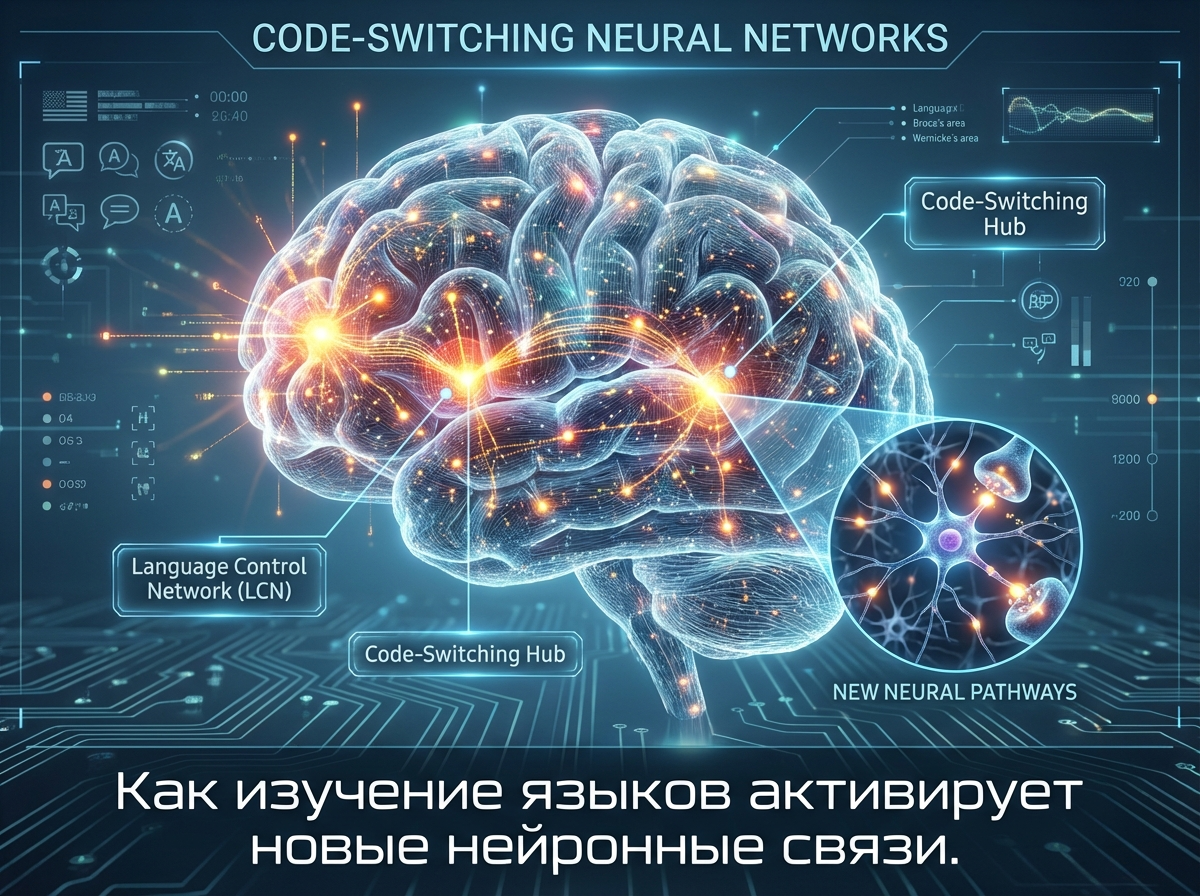
- Neuroplasticity : The brain physically changes by forming new neural connections.
- Executive functions : Improved attention control and ability to switch between tasks (multi-tasking).
- Disease prevention : Clinical studies have proven that bilingualism delays the onset of Alzheimer’s symptoms by an average of 4 to 5 years. It’s a medicine that’s always with you.
Contrast: Today’s Legal Context and Globalization
We must warn you of a paradox. Since March 1, the provisions of Federal Law No. 168-FZ, regulating the use of foreign words, have been in effect in Russia. The law restricts Anglicisms in public spaces (signs, advertising).
A situation of “double standards” is developing:
- On the street : Forced Russification.
- In the works : Global business, IT and science remain 100% Anglocentric.
Growth-oriented professionals are forced to navigate dual realities. To remain a sought-after professional, you’ll need to comply with local laws, but for real-world work, you’ll need to use English exclusively.
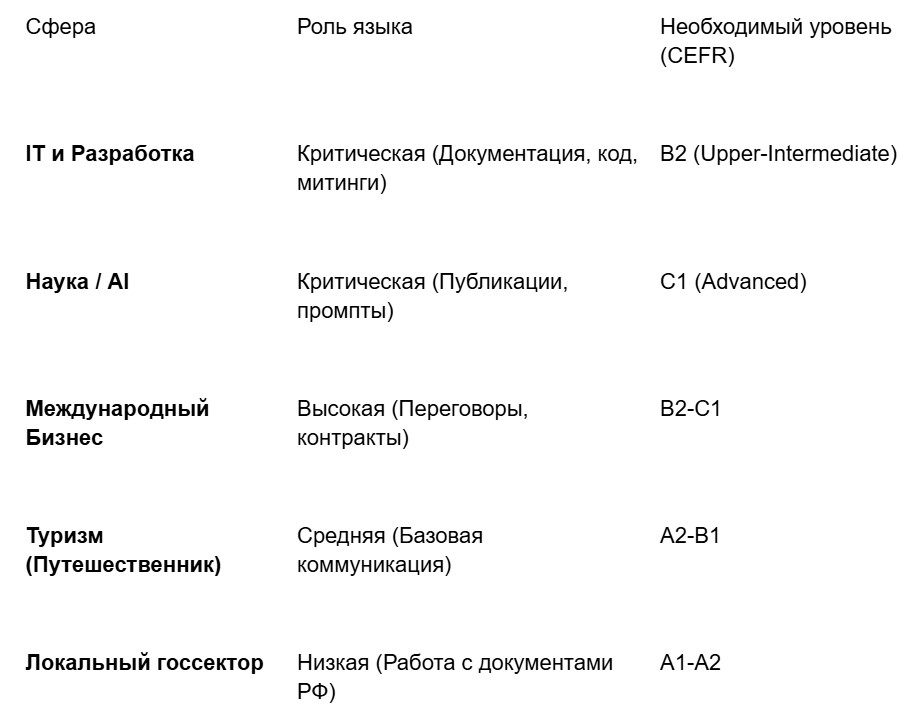
Comparison table: Where is English needed 100%?
We’ve created this table to help you quickly assess your risks. Find your area:
Practical algorithm: How to start learning if you don’t have time?
"I don’t have time" is the most common excuse we hear. But the secret isn’t having a free hour, but a systematic approach. Here’s a step-by-step action plan:
Step 1. Micro-dosing Method
Forget about two-hour lectures once a week. Learning effectiveness depends on consistency. Fifteen minutes every day is more effective than three hours on Sunday. This has to do with how our memory works.
Step 2: Use ready-made tools
You don’t have to reinvent the wheel. If you’re overwhelmed by the abundance of materials and don’t know where to start, we’ve compiled a resource. Download our detailed [guide to self-studying English], which already outlines effective starting points.
Step 3. Hacking Reality
Transform your passive vocabulary into an active one without changing your life schedule:
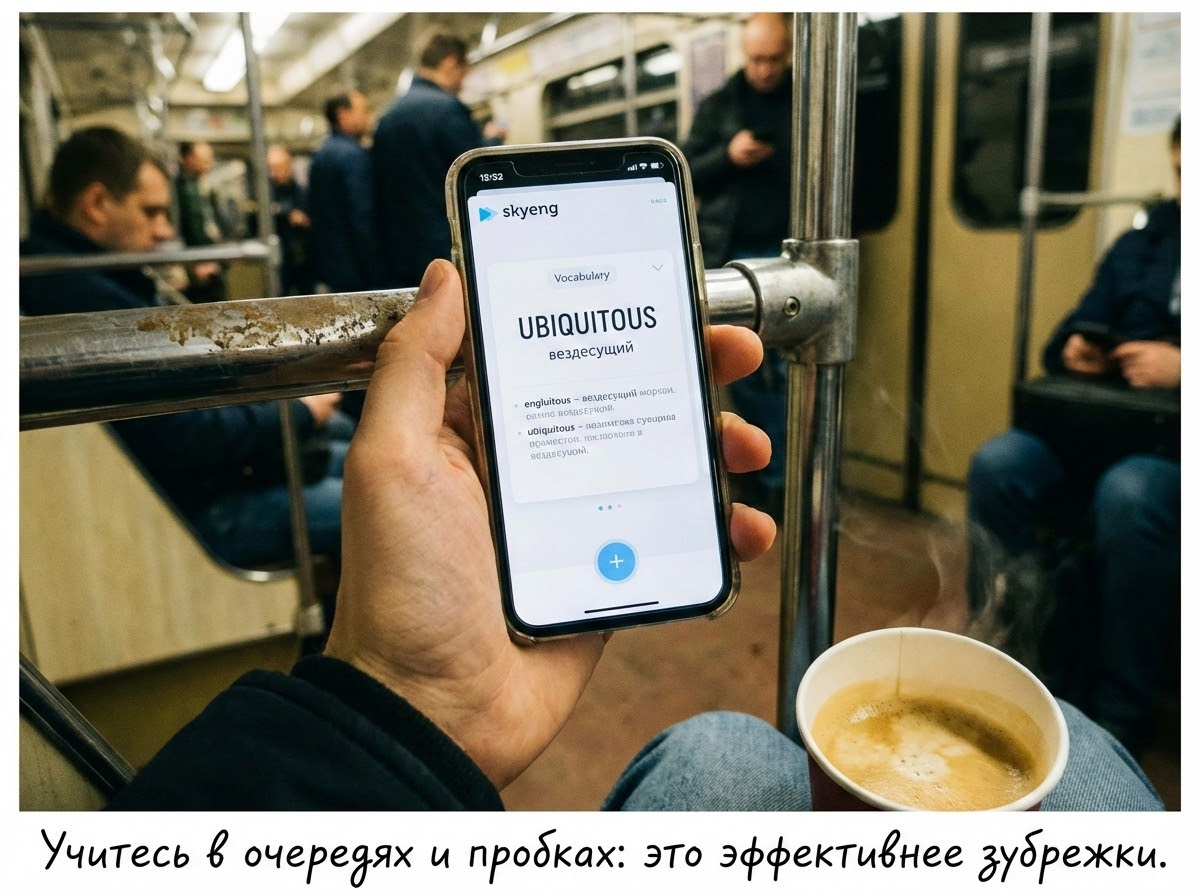
- On the road : Replace Russian radio with English-language podcasts.
- On your phone : Switch your smartphone’s interface to English. You’ll learn 50 new words in a week simply by tapping familiar icons.
- In learning : Ask AI (ChatGPT) to be your conversational partner. Write: "Act as an English teacher, correct my mistakes."
Step 4. Conversational practice
The only way to start speaking is to actually talk. Apps are great, but they’re no substitute for real-life conversation. Use conversation clubs to overcome your psychological barrier and fear of making mistakes.
FAQ: Honest answers to frequently asked questions
Is it possible to learn English in 3 months? Let’s be honest: no. In 3 months, you can master the "language of survival" (A1-A2) — ordering food, asking for directions. But to achieve professional proficiency (B2), you need 500 to 850 academic hours of systematic work. Any promises of "English in your sleep" or "in 2 weeks" are marketing hype that contradicts the physiological nature of the brain.
Is a talent for languages necessary? The concept of "talent for languages" is a myth often used to justify inaction. Science doesn’t support its existence as a decisive factor. Success is a function of motivation, the right methodology, and discipline. Anyone can learn a language; it just takes a little longer for some.
What level of IT expertise is required? The minimum entry level is B1 (Intermediate). This is enough to read documentation with a dictionary. However, to participate in daily scrum meetings, justify your decisions, and correspond with clients, you need a confident B2 (Upper-Intermediate) level.
Instead of a conclusion
Let’s be honest. You can read ten more articles about the benefits of English, agree with all the arguments, nod… and close the tab. And nothing will change tomorrow.
Fear of a large workload is normal. But "an elephant can be eaten one bite at a time." You don’t need to become a native speaker by next Monday. You just need to take the first, smallest step today. Download an app, learn five words, or watch one episode of your favorite TV show in the original.
The eyes are afraid, but the brain learns. Just start. It’s easier than it seems.
List of sources
Demand for Bilingual Workers More Than Doubled (American Immigration Council) - https://www.americanimmigrationcouncil.org/press-release/demand-for-bilingual-workers-more-than-doubled-in-5-years-new-report-shows/
New Law on the Russian Language (Solstico Legal) - https://solstico.legal/tpost/npta6yrej1-new-law-on-the-russian-language-what-for
The answer is 17 years, what is the question: understanding time lags in translational research (NCBI) - https://pmc.ncbi.nlm.nih.gov/articles/PMC3241518/
Investing in English Skills (Brookings) - https://www.brookings.edu/articles/investing-in-english-skills-the-limited-english-proficient-workforce-in-us-metropolitan-areas/
Bilingualism delays clinical manifestation of Alzheimer’s disease (PMC) - https://pmc.ncbi.nlm.nih.gov/articles/PMC7195235/
How long does it take to learn English? (EF FAQ) - https://www.ef.edu/blog/faq/how-long-to-learn-english/
- Exhibition of Vladimir Alexandrovich and Andrei Vladimirovich Vetrogonsky (St. Petersburg) "It is not time to take stock …"
- Trendy women’s tattoos
- Buy a Janome 2325 machine and enjoy sewing
- “Where The Mountain Meets The Moon” by Grace Lin
- Lecture "Icons -" black boards "
- Lecture by Sergey Olegovich Kuznetsov "Collection as a message: two Stroganov houses in St. Petersburg"
- "City of Creators. City of the First"
- Exhibition of Nikolai Kondakov "City Mosaic"
You cannot comment Why?