A Peasant Woman Digging in Front of Her Cottage Vincent van Gogh (1853-1890)
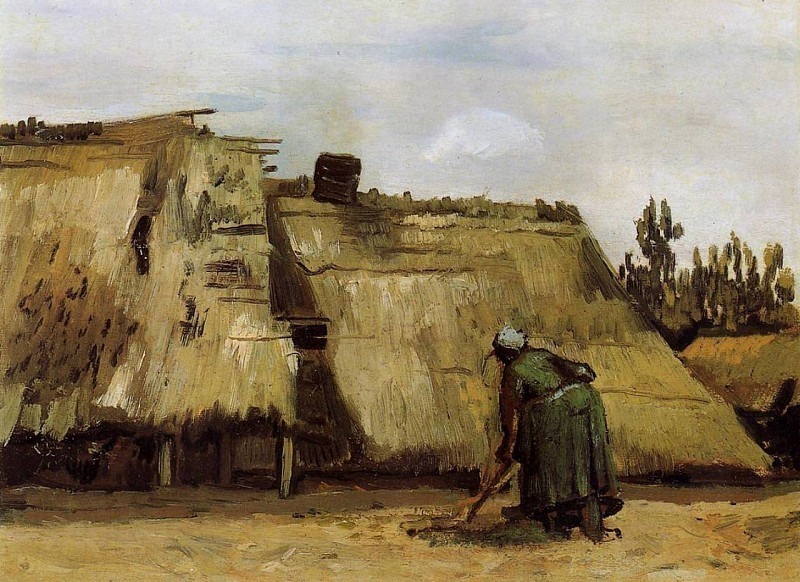
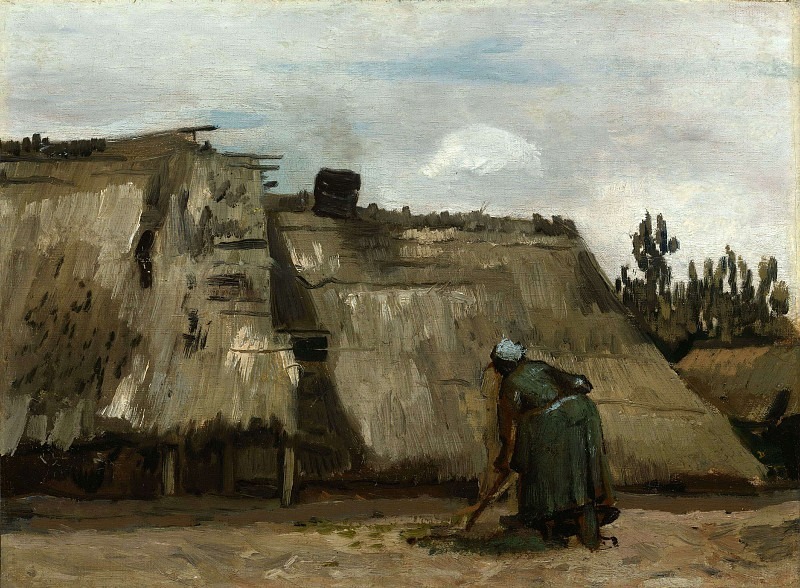

Vincent van Gogh – A Peasant Woman Digging in Front of Her Cottage
1885
Edit attribution
Download full size: 1280×931 px (0,2 Mb)
Painter: Vincent van Gogh
Location: Art Institute, Chicago.
Album navigation:


You cannot comment Why?
The artist’s brushwork is characterized by visible, impasto strokes that lend texture to both the cottages roof and the surrounding earth. This technique contributes to a sense of immediacy and physicality within the scene. The application of paint isnt smooth or blended; instead, it retains its individual marks, creating a rough, almost tactile surface.
Beyond the cottage, a sparse landscape stretches into the distance. A few slender trees punctuate the horizon line, their dark silhouettes contrasting with the lighter sky above. This limited depth creates a sense of enclosure and isolation around the central figures and structure. The subdued palette – primarily browns, greens, and grays – reinforces this feeling of austerity and quietude.
Subtly, the painting conveys themes of rural labor and resilience. The woman’s activity suggests an ongoing cycle of work necessary for survival and sustenance. The cottage itself, with its humble construction and weathered appearance, speaks to a life lived in close proximity to nature and bound by tradition. Theres a certain dignity conveyed through her toil; she is not presented as pitiable but rather as engaged in essential, albeit arduous, tasks.
The composition’s emphasis on the cottage’s mass and the woman’s labor could be interpreted as an exploration of human connection to place and the enduring nature of rural existence. The lack of overt sentimentality allows for a contemplative engagement with the scene, inviting viewers to consider the quiet realities of life outside urban centers.