Ivan the Terrible and His Son Ivan on November 16 1581 Ilya Repin (1844-1930)
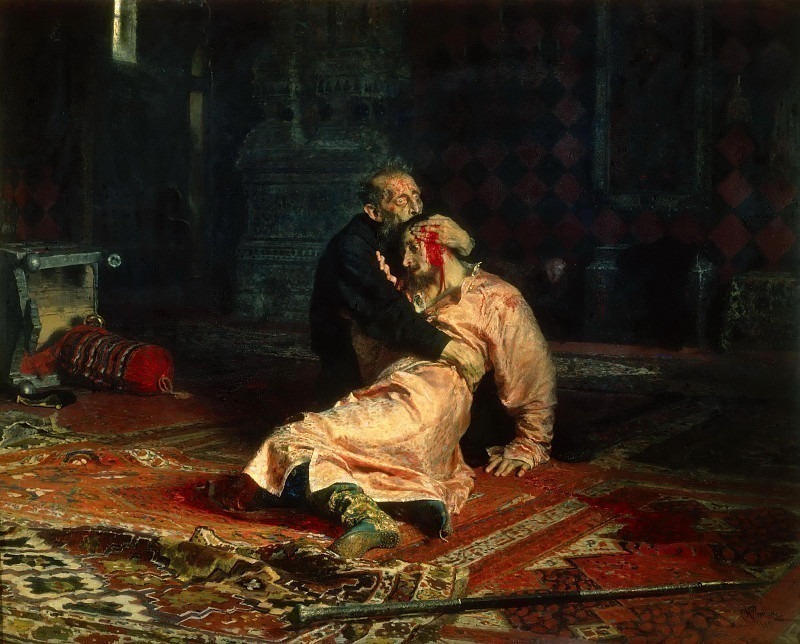
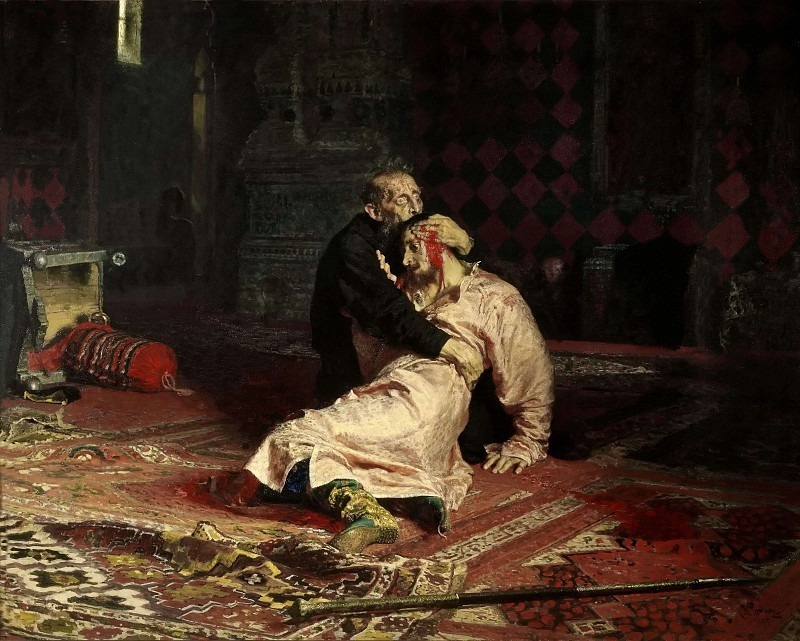

Ilya Repin – Ivan the Terrible and His Son Ivan on November 16 1581
Edit attribution
Download full size: 3356×2701 px (1,4 Mb)
Painter: Ilya Repin
Location: The State Tretyakov Gallery, Moscow (Государственная Третьяковская галерея).
Album navigation:


The painting "Ivan the Terrible and His Son Ivan on November 16, 1581" is one of the most celebrated works by the great Russian artist Ilya Efimovich Repin. The idea for the painting came to the artist after a concert of Rimsky-Korsakov, in addition, it is believed that the reason for its writing was the murder of Tsar Alexander II and the repression. This painting was not only a completely unexpected, innovative portrayal of Ivan the Terrible, but also the most famous work of Ilya Repin. The work amazes, frightens and captivates the viewer with its vivid expressiveness and subject matter.
ArtClub
Best Contemporary Atists
Description of Ilya Repin’s painting "Ivan the Terrible and His Son Ivan, November 16, 1581" (The Terrible Killing His Son)
The painting "Ivan the Terrible and His Son Ivan on November 16, 1581" is one of the most celebrated works by the great Russian artist Ilya Efimovich Repin.
The idea for the painting came to the artist after a concert of Rimsky-Korsakov, in addition, it is believed that the reason for its writing was the murder of Tsar Alexander II and the repression. This painting was not only a completely unexpected, innovative portrayal of Ivan the Terrible, but also the most famous work of Ilya Repin.
The work amazes, frightens and captivates the viewer with its vivid expressiveness and subject matter. Everything in it is eloquent and adds tension: the tones of the painting are either screaming blood-red or dark and gloomy; the murder weapon, a rod with a sharp tip, is stained with blood; the chair has fallen, the carpet is knocked over, and in the middle sits the distraught old man with his murdered son on his lap. And yet, all the peculiarity of the picture lies in these two figures.
A moment’s insanity caused the father to strike his own son dead in the temple with his rod. Immediately aware of what has happened, the old man rushes to his beloved heir, panic-stricken, tries to clasp his hand to the bloody wound, holds him close and kisses his son on the forehead, gazing into the distance with eyes full of terror and despair. He had already realized that the terrible and irreparable happened ... One can only wonder how accurate Repin was able to portray all the range of emotions and feelings that engulfed the killer at that moment willy-nilly. The victim in the picture, his son Ivan, arouses compassion and pity in the viewer: his face expresses a quiet doom, and his posture - the complete lack of vitality.
The painting Ivan the Terrible and His Son Ivan on November 16, 1581 depicts not just the murder of his son by the Tsar, but a tragedy reminiscent of the recent massacre of the People’s Resistance at that time. The vivid images produced and still produce the desired effect on any viewer, leaving no one indifferent.


COMMENTS: 28 Ответы
Помоему эта картина называется “Иван Грозный убивает своего сына”. Ошибка?
Наталья, название картины здесь написано абсолютно правильно: Иван Грозный и сын его Иван 16 ноября 1581 года. Кстати, вовсе не факт, что Иван Грозный действительно убил своего сына. Есть разные версии...
Я тоже все время считал, что эта картина называется“Иван Грозный убивает своего сына”.
просто такое название у всех на слуху. да и тем более посмотрев на картину невозможно подумать что-либо другое! явно они не плюшками балуются!
Осерчав ударил сына набалдашником трости в висок, а убил ипи нет, неизвестно.
Конечно убил! А вообще мне очень нравится картина. Заставляет задуматься...
не стоит быть столь категоричными. ударил – исторический факт. и то, что Иван Иванович умер через неделю после этого – тоже. так что ему вполне могли помочь
он погиб!!!!
мне очень нравится эта картина!!!
В останках царевича, также как и в останках его отца, было обнаружено крайне высокое содержание всё той же ртути, до 1,3 мг на 100 грамм навески (естественный фон – сотые доли милиграмма). Значительно был превышен и естественный фон по мышьяку. Как проинформировал московский НИИ судебной медицины: “При исследовании волос, извлеченных из саркофага Ивана Ивановича, крови не обнаружено”. Не убивал жезлом царь своего сына, сбрехнул художник Репин, начитавшись Карамзина.
эта ужас...
Уже совсем неважно ошибся Репин или нет. Это великая картина и нам остается только созерцать сие творение.
давайте о картине говорить, а не о названии, м?
Убил, не убил. Какая теперь разница. Назад ничего не вернешь. Россия многострадальная страна. Чего только не пережила. И еще переживет. Если, конечно, не вымрем. Нам"везет" на правителей.
Жалко его...
какая разница убил или не убил Грозный своего сына в истории, сюжет картины вот что главное, вы можете посмотрев на картину сказать, что человек в монашеской одежде убил человека в розовом кафтане? исходите из замысла произведения. Репин не ставил перед собой задачу рассказать убивал или не убивал Грозный своего сына, поэтому и назвал картину "Иван Грозный и сын его Иван 16 ноября 1581 года. " качество репродукции кстати корявое, все цвета не те.
Комуто его жалко, комуто без разницы, а мне кажется, что еслибы он не убил его то в истории всё бы былобы по другому!
Грозный с ума сходил, вот и убил.
The painting is horrifying; it makes you look at it with dread. Why? Its unsettling to see a father killing his own child. Especially when the father is Ivan the Terrible. This figure has already been surrounded by legends and myths. People attribute all sorts of things to the great Moscow Tsar. He was considered insane, called a devil, a recluse, but at the same time, everyone acknowledged that he actually held power and made Russia a strong state.
Theres no doubt that he killed his son, but theres also no doubt that both were not meant to live long lives in this world. During the Soviet era, their burial sites were discovered in the Dormition Cathedral of the Kremlin, and examinations of the remains revealed a shocking truth. Both were poisoned with mercury. Slowly, methodically, constantly. So even if the Tsar hadns killed his son, he himself would have died soon anyway. At least, its certainly known that Ivan the Terrible died from mercury poisoning.
But Repins painting shocked everyone. It was the chosen composition, the chosen depiction of these figures. And most importantly, how they were portrayed. By the way, initially, the artist wanted to include a retinue around them, but he soon changed his mind, deciding that a more intimate setting would be emotionally stronger. Then Repin began searching for models. He found the interiors of the Tsars chambers in the Boyar House of the 17th Century museum; the chair, mirror, and caftan of the Tsarevich were taken from items in the Armory Chamber, the Tsars staff was copied from a scepter in the palace of Tsarskoye Selo, and the chest was found in the Rumyantsev Museum. And Repin began working furiously, able to work for days, weeks, months from morning till night. He tortured himself, drove himself to exhaustion. Sometimes he would start working and paint for a long time, then stop and hide the canvas away from himself and his loved ones, but then he would return to it again. He reworked many things and created new versions over and over again until he was convinced that the final version was right.
And when the work was finished and exhibited, it caused a sensation. People came in droves to see the artists creation, and they left the exhibition amazed and depressed. Such intense emotion once led to trouble. Years later, one of the museum visitors, after looking at Repins paintings and seemingly having moved on from that particular painting, suddenly rushed back to it and, with a knife in his hand, shouted: Enough blood! The knife plunged three times into the canvas, right where the faces of the Tsar and Tsarevich were depicted. The vandal was arrested, and there was a scandal; the canvas seemed irreparably damaged. Repin himself arrived, and he was asked to save the painting. He agreed, but... It wasnt the same Repin who had worked on that canvas before – his style of work, his method, had changed. He depicted new colors, practically restored the faces, but they looked completely different. The artist Grabar noticed this and, after Repin left, he risked restoring everything, but in a different way. He erased all the new colors applied by Repin and tried to subtly restore what had been depicted by Repin at that time. And it seems he succeeded because neither the author nor we today actually notice the damage inflicted on the canvas by the vandal.
Картина прекоасна настолько настолько печальна
ау нас памятник поставили Ивану Грозному в Орле
он основал г. Орел
Другая версия файла
On the evening of May 25, 2018, a visitor to the Tretyakov Gallery intentionally damaged Repins painting Ivan the Terrible and His Son Ivan on November 16, 1581. The vandal broke the protective glass with a stand, as a result of which the canvas was torn in three places. The painting has been removed from display and is being worked on by restorers. According to unofficial information, the restoration is estimated at a minimum of 500,000 rubles. The vandal, Igor Podporin, has been detained, handed over to the police, and a criminal case has been opened.
Statement from the State Tretyakov Gallery regarding the attack on the painting by I.E. Repin Ivan the Terrible and His Son Ivan on November 16, 1581 (1885, canvas, oil. 199.5 x 254), which belongs to the collection of the State Tretyakov Gallery (inventory No. 743).
On May 25, 2018, at 20:55, shortly before the museum closed, during a commission inspection of the permanent exhibition of the Tretyakov Gallery in Lavrushinsky Lane, a man among the last visitors to the museum broke through into the already empty hall of I.E. Repin, passing through a group of employees of the Tretyakov Gallery who were conducting a routine inspection of the halls before closing, and struck the glass-covered canvas of the painting Ivan the Terrible and His Son Ivan... several times with a metal stand from the barrier.
As a result of the blows, the thick glass that protected the work from temperature and humidity fluctuations was broken. The painting has sustained serious damage. The canvas is torn in three places in the central part of the work, on the figure of the tsarevich. The authors artistic frame was also severely damaged by the falling glass. Fortunately, the most valuable parts – the images of the faces and hands of the Tsar and the Tsarevich – were not affected.
Thanks to the professional and selfless actions of museum guards and security personnel of the Tretyakov Gallery, the vandal was disarmed, detained, and handed over to law enforcement agencies. An investigation is underway.
After receiving information about the incident, the chief curator, restorers, the management of the museums security service, as well as employees of a specialized firm for working with works of art immediately arrived at the scene to take urgent measures to save the work of art. The General Director of the Tretyakov Gallery is on a business trip abroad, but he has up-to-date information and is constantly in contact with museum staff by phone, informing the management of the Ministry of Culture of the Russian Federation about what happened.
After the initial investigative measures were completed, restorers from the Tretyakov Gallery carried out urgent emergency work – glass fragments were removed, the painting and frame were dismantled, after which the work was removed from the permanent exhibition and transferred to the museums restoration workshop.
Restorers from the Tretyakov Gallery immediately began to study the consequences of the blows and develop a comprehensive program for restoring the work of art. Among the priority actions is the holding of an expanded restoration council with the participation of leading specialists in the country.
В 1990-х годах в результате исследования захоронений московских великих княгинь и цариц был выявлен факт отравления сулемой матери государя Иоанна Васильевича, Елены Васильевны Глинской (умерла в 1538 году) и его первой жены Анастасии Романовой (умерла в 1560 году). А версию о сыноубийстве историческая наука опровергла еще в 1963 году, установив тогда же факт отравления самого государя. Тем не менее, грязные измышления не только не были опровергнуты в масс-медиа, но муссируются искусственно до сих пор. Кстати, отравление ртутью -- это очень и очень больно... Все наше родное, русское, изувечено ложью до неузнаваемости. И самый большой удар приняло на себя Русское Самодержавие. Народ наш даже свою не столь давнюю историю, включая подлинные свидетельства об Отечественной войне, до сих пор изучает по тем крупицам страшной правды, которую в свое время из уст в уста шепотом передавали (если не боялись) близкие, очевидцы. Архивы периода столетнего рабства до сих пор недоступны, с перспективой на уничтожение.
По утверждению некоторых источников, первый слон на Руси появился во времена Ивана Грозного. Дабы избежать нападок от агрессивного соседа, персидский шах Тахмасп подарил русскому царю слона, вместе с арабом, который ухаживал за животным. Бедный слон и догадываться не мог, что Русь окажется к нему, так неприветлива.
Началось всё с того, что слон преодолел несколько тысяч вёрст пешком, и это от Персии до Москвы. После чего без сил упал перед русским царём. 200 стрельцов с трудом подняли его на ноги. Иван Грозный был очень доволен тем, что такое огромное существо “поклонилось” ему и дал указ кормить слона “как его самого”.
Но бедному животному, по всей видимости, своей смертью умереть было не суждено. По одной из версий, на Красной площади отмечался праздник, и слона в суматохе покормить забыли. Когда его привели на поклон к царю, он, вероятно думая о еде, так и не поклонился. Слон вместо поклона недовольно протрубил царю в лицо.
Иван Грозный в гневе сослал слона, вместе с арабом, на Север. Араб вскоре умер. Тогда русский царь велел умертвить и слона. Вскоре люди, явившиеся исполнить приказ Ивана Грозного, обнаружили, что из сарая, в котором его держали, слон сбежал. Нашли его рядом с могилой своего хозяина-араба. Там слона и добили.
Вот такая вот трогательная история о жестокости Ивана Грозного.
Репин как реалист превосходно передал атмосферу происходящего. Эмоциональное состояние царя просто поражает. Аналогов в мировой живописи практически нет, за исключением пожалуйста что картины Ф. Гойи"Сатурн пожирает своих детей". Но есть одно большое но. Я бы себе такую картину не повесил, т. к она несёт в себе явный негатив – убийство. Я понимаю амбиции художника. И. Е. Репину хотелось создать оригинальный шедевр, так и должно быть. Без больших амбиций не состоится ни один большой художник. Но живописец конечно же не мог предвидеть последствия своего творения-покушения на картину, вследствие чего она несколько раз реставрировалась. Вывод очевиден картина очень негативно действует на людей с неуровновешенной психикой. Да и с нормальной тоже. Так что делайте выводы. Я бы посоветовал сотрудникам третьяковки убрать картину в запас ники, от греха подальше. Или выставить копию или репродукции картины в уменьшенном формате, т. к именно масштаб полотна в том числе действует на людей отрицательно. Ошибка Репина в том, что он взял слишком большой размер холста для такого сюжета, где лужа крови, убийство родного сына, страх и ужас от содеянного на лице царя.
Читаю комментарии... "Убил не убил, какая разница..." и следующий "А у нас в Орле..."
А разница большая. Из наших царей делают монстров, а из нас дикарей. А нам нет разницы...
Уже давно установлено, Грозный не убивал сына. Говоря современным языком, это фейк! А Репин, вольно или не вольно, сделал так, что этот фейк стал очень распространенным. Надеюсь, неумышленно....
You cannot comment Why?
The subtext of the painting is its powerful portrayal of a fathers regret and horror after having fatally wounded his son in a fit of rage. The historical event, the alleged killing of Ivan Ivanovich by his father, Tsar Ivan the Terrible, is depicted at the cusp of realization for the Tsar. The subtext lies in the stark representation of the psychological torment and the sheer barbarity of the act, amplified by the contrast between the luxurious setting and the brutal violence. The painting evokes universal themes of familial destruction, the consequences of unchecked power and temper, and the crushing weight of remorse. The intense facial expressions and the visceral depiction of blood suggest a profound emotional breakdown and a moment of devastating clarity for Ivan the Terrible, realizing the irrevocable damage he has inflicted.