Beggar with Oysters (Philosopher) Édouard Manet (1832-1883)

Édouard Manet – Beggar with Oysters (Philosopher)
1865-67. 187x108
Edit attribution
Download full size: 1312×2250 px (0,2 Mb)
Painter: Édouard Manet
Location: Art Institute, Chicago.
Album navigation:


You cannot comment Why?
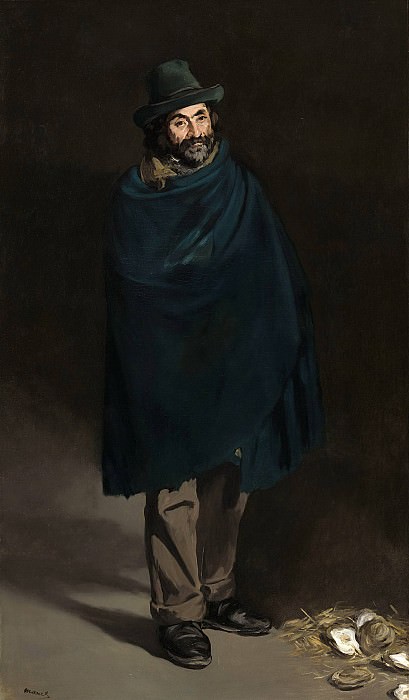
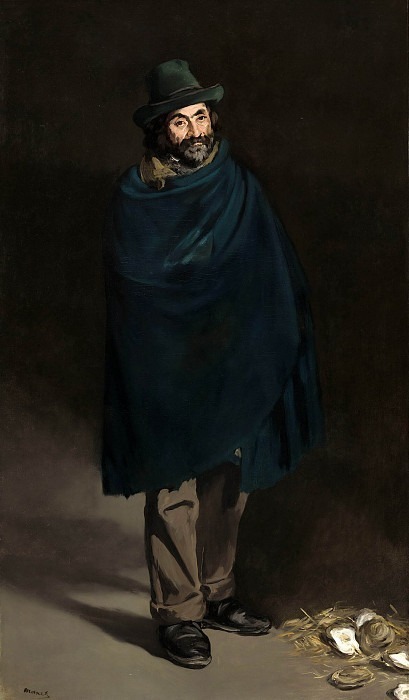
At the figure’s feet lies a scattering of oyster shells, hinting at a recent meal or a discarded indulgence. The presence of these oysters introduces a layer of complexity; they are a luxury item, incongruous with the mans apparent destitution. This juxtaposition generates an immediate tension – a visual paradox that invites contemplation.
The lighting is carefully orchestrated to highlight certain aspects while obscuring others. A soft glow illuminates his face and upper body, allowing for observation of his features – the deep lines etched around his eyes and mouth suggest a life marked by experience. The darkness enveloping him creates an atmosphere of mystery and isolation, suggesting that he exists on the periphery of society.
The man’s gaze is directed downwards, avoiding direct engagement with the viewer. This gesture reinforces the sense of solitude and introspection. He appears lost in thought, perhaps contemplating the nature of existence or the irony of his situation – a pauper enjoying a delicacy. The painting seems to explore themes of poverty, philosophy, and the unexpected intersections between hardship and refinement. It is not merely a depiction of a beggar; it is an exploration of human condition, prompting reflection on values, perception, and the meaning of life itself.